
 Image 1 of 3
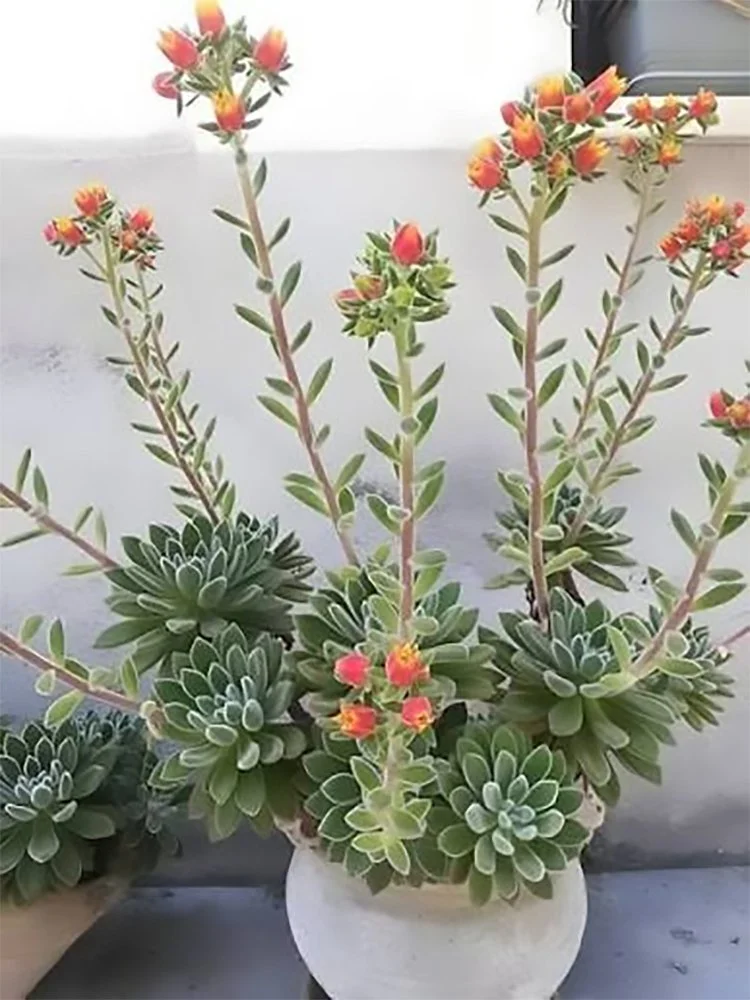 Image 2 of 3
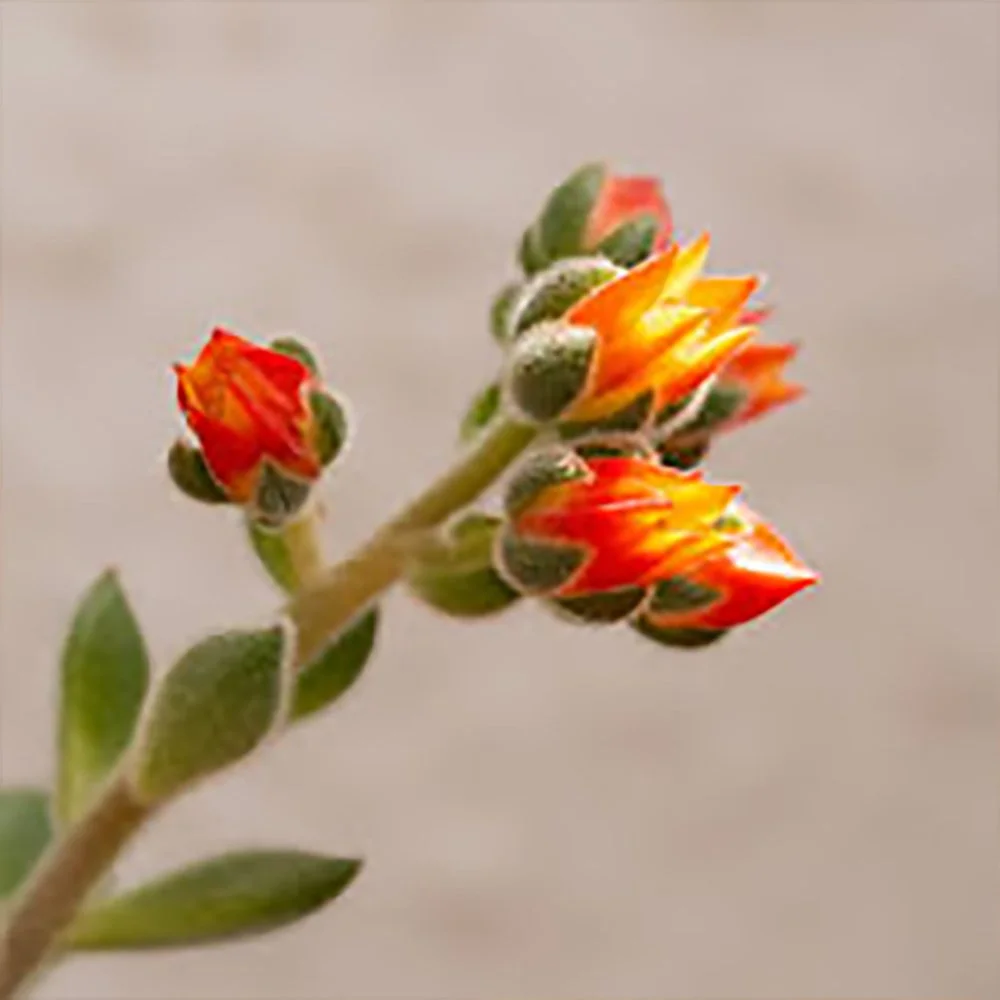 Image 3 of 3
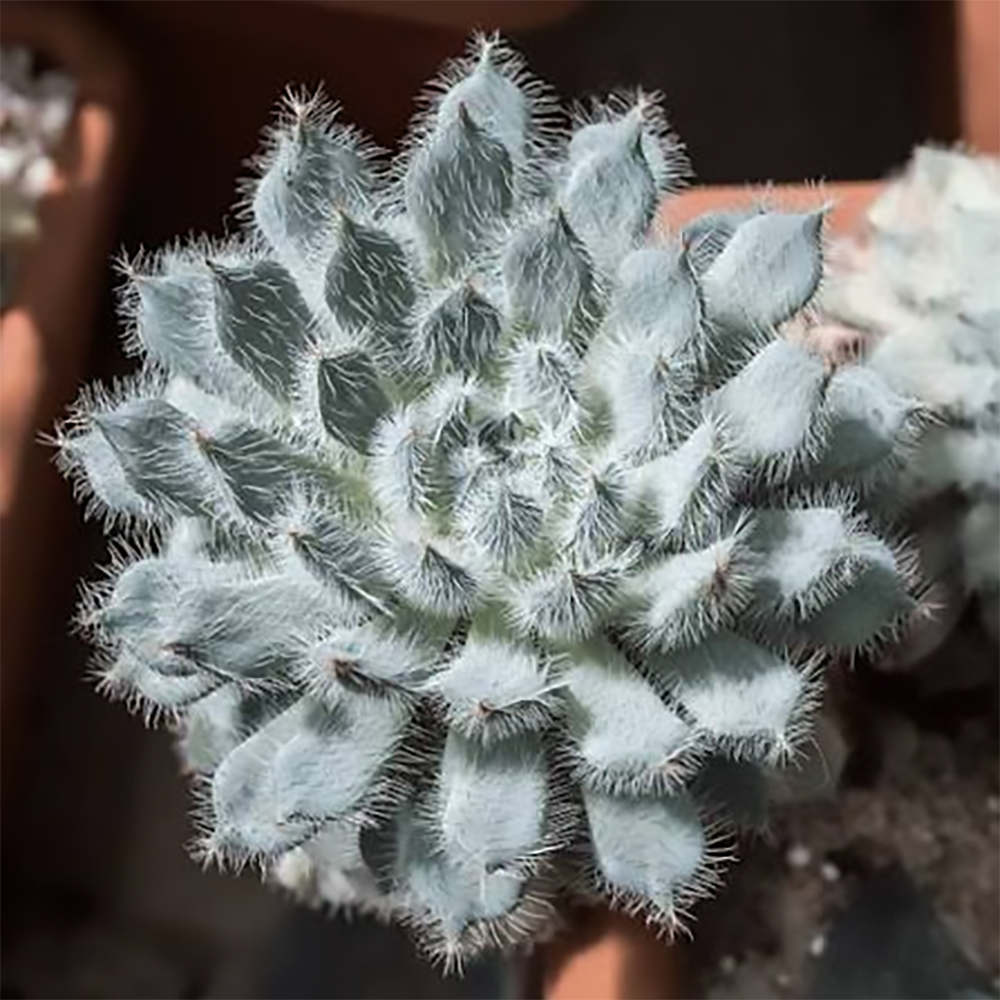
Echeveria setosa, commonly known as Mexican Firecracker or Firecracker Echeveria, is a compact, rosette-forming succulent prized for its soft, fuzzy green leaves covered with fine white hairs and its brilliant red-and-yellow flowers. Native to mountainous regions of Puebla, Mexico, it grows naturally in rocky habitats where excellent drainage is essential. Mature rosettes typically reach about 3–6 inches tall and 4–8 inches wide, gradually producing offsets that can form attractive clusters. In spring and summer, arching flower stalks rise above the foliage carrying vivid red, orange-red, and yellow bell-shaped flowers that attract hummingbirds and other pollinators. Best suited to USDA Zones 9–11, Mexican Firecracker thrives in bright light to morning sun, fast-draining succulent soil, and warm conditions around 65–85°F. Protect it from intense afternoon sun in very hot desert climates. In winter, reduce watering and keep the soil relatively dry; protect it from frost and prolonged freezing, especially when temperatures fall below about 30–32°F.
Echeveria setosa, commonly known as Mexican Firecracker or Firecracker Echeveria, is a compact, rosette-forming succulent prized for its soft, fuzzy green leaves covered with fine white hairs and its brilliant red-and-yellow flowers. Native to mountainous regions of Puebla, Mexico, it grows naturally in rocky habitats where excellent drainage is essential. Mature rosettes typically reach about 3–6 inches tall and 4–8 inches wide, gradually producing offsets that can form attractive clusters. In spring and summer, arching flower stalks rise above the foliage carrying vivid red, orange-red, and yellow bell-shaped flowers that attract hummingbirds and other pollinators. Best suited to USDA Zones 9–11, Mexican Firecracker thrives in bright light to morning sun, fast-draining succulent soil, and warm conditions around 65–85°F. Protect it from intense afternoon sun in very hot desert climates. In winter, reduce watering and keep the soil relatively dry; protect it from frost and prolonged freezing, especially when temperatures fall below about 30–32°F.