
 Image 1 of 4
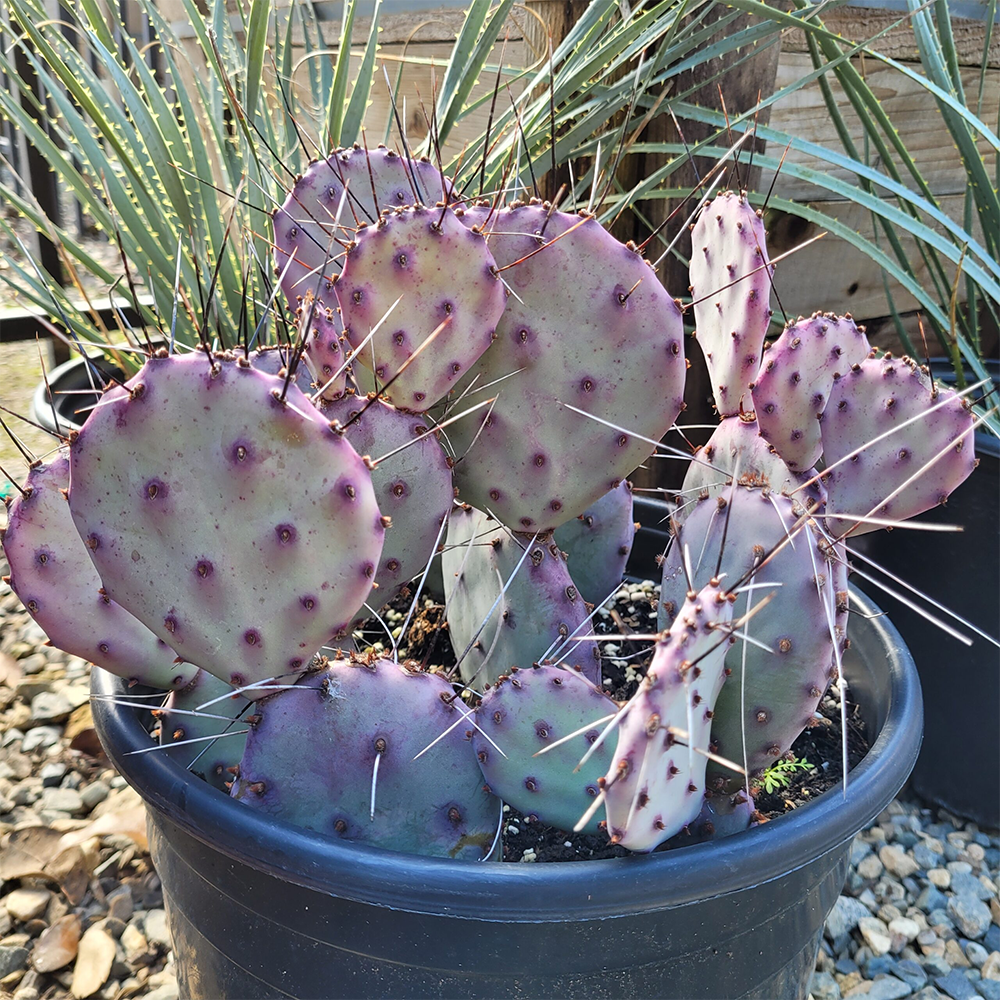 Image 2 of 4
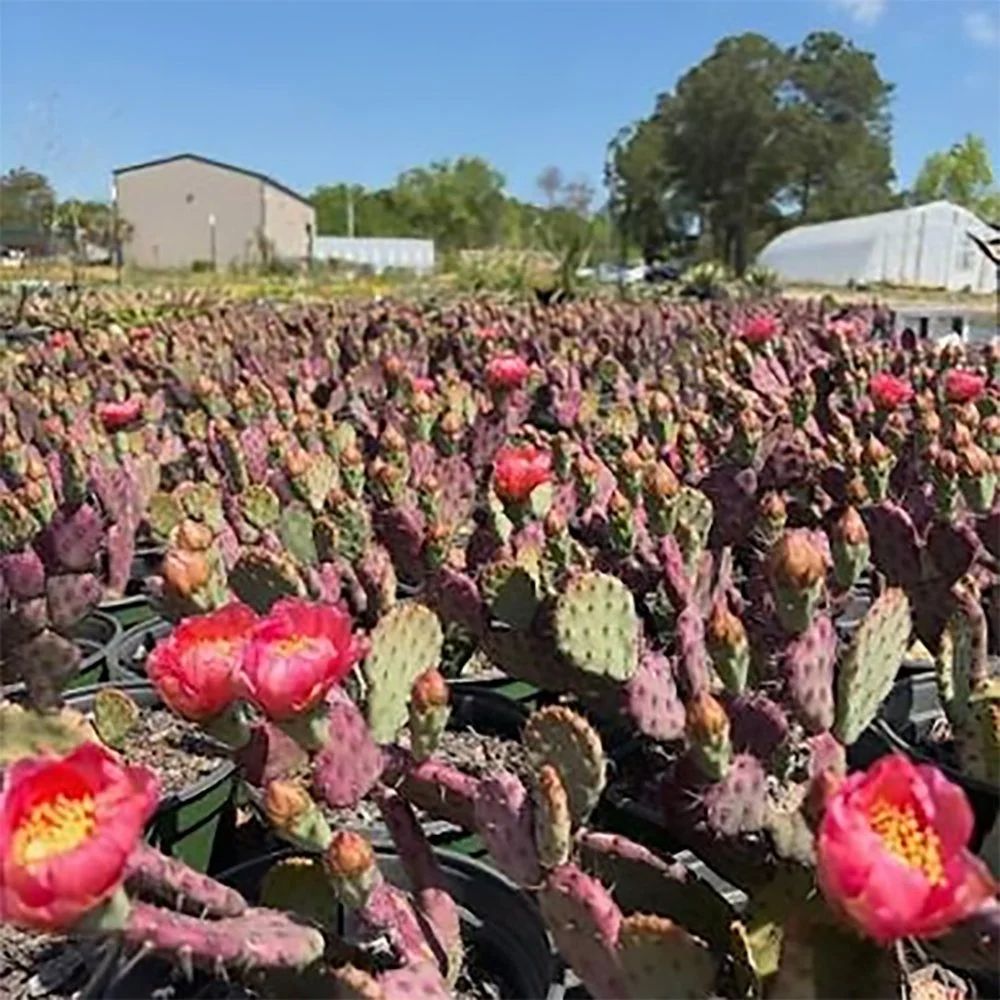 Image 3 of 4
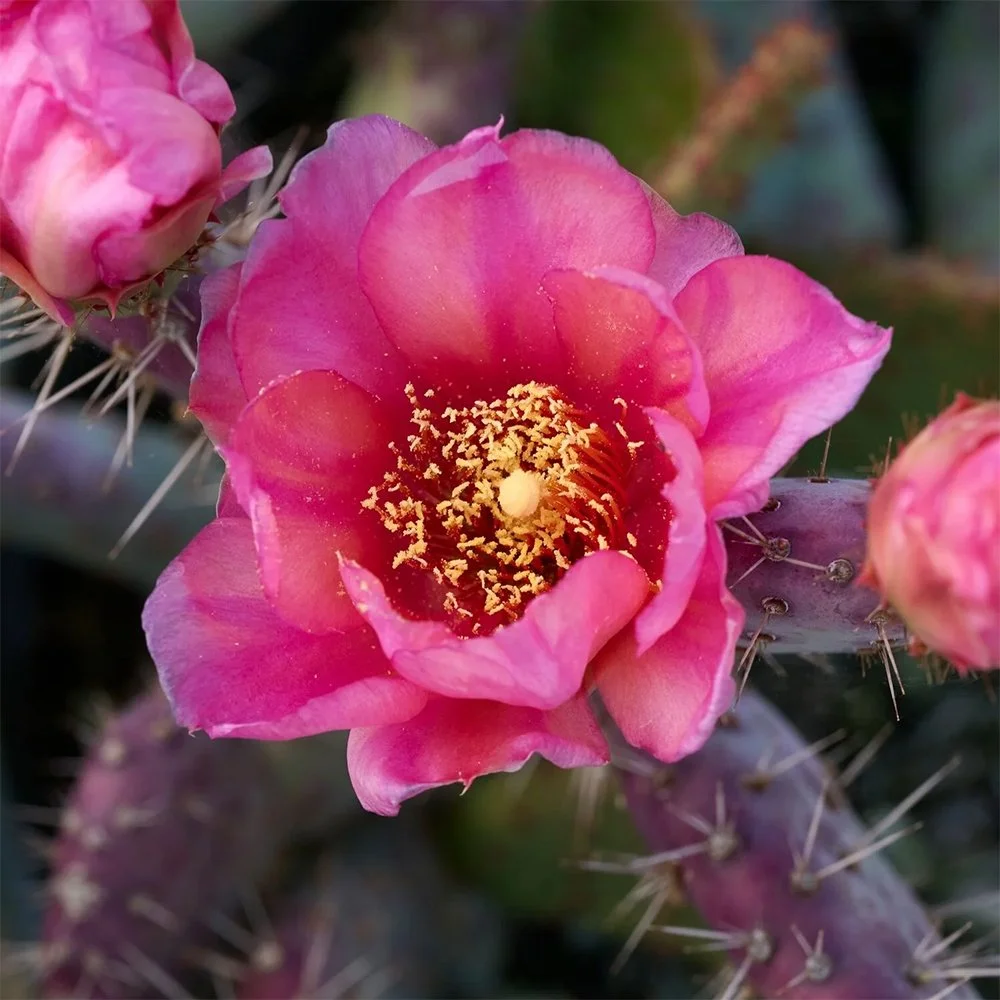 Image 4 of 4
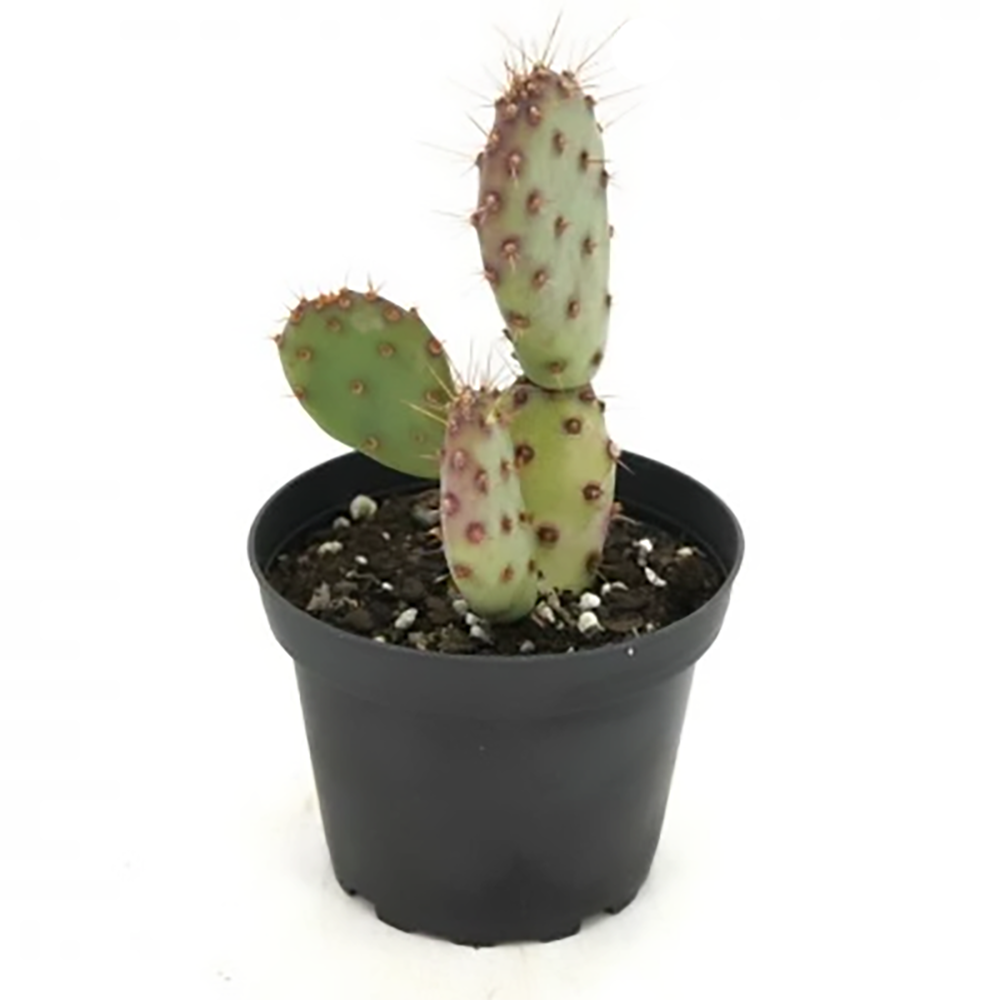
The Baby Rita Prickly Pear (Opuntia × basilaris ‘Baby Rita’) is a stunning, compact hybrid cactus prized for its colorful, color-shifting pads and vibrant blooms. Developed from prickly pear species native to the deserts of the southwestern United States and northern Mexico, it is well-suited to hot, dry climates and water-wise landscapes. Its rounded pads range from blue-green and gray-green to rich shades of purple and violet, with the deepest purple coloring often appearing during cooler weather or periods of drought stress. In spring, brilliant rose-pink to magenta flowers provide a striking contrast against the colorful pads and attract pollinators. Baby Rita develops a low, spreading growth habit, typically reaching about 1–2 feet tall and 2–3 feet wide, making it an excellent choice for rock gardens, xeriscapes, containers, borders, and small desert gardens. It thrives in full sun and exceptionally well-draining soil, requires little supplemental water once established, and is generally suited to USDA Zones 7–10, with good cold tolerance when grown in dry winter conditions. Like other prickly pears, it may have tiny glochids that can irritate the skin, so gloves or tongs are recommended when handling.
The Baby Rita Prickly Pear (Opuntia × basilaris ‘Baby Rita’) is a stunning, compact hybrid cactus prized for its colorful, color-shifting pads and vibrant blooms. Developed from prickly pear species native to the deserts of the southwestern United States and northern Mexico, it is well-suited to hot, dry climates and water-wise landscapes. Its rounded pads range from blue-green and gray-green to rich shades of purple and violet, with the deepest purple coloring often appearing during cooler weather or periods of drought stress. In spring, brilliant rose-pink to magenta flowers provide a striking contrast against the colorful pads and attract pollinators. Baby Rita develops a low, spreading growth habit, typically reaching about 1–2 feet tall and 2–3 feet wide, making it an excellent choice for rock gardens, xeriscapes, containers, borders, and small desert gardens. It thrives in full sun and exceptionally well-draining soil, requires little supplemental water once established, and is generally suited to USDA Zones 7–10, with good cold tolerance when grown in dry winter conditions. Like other prickly pears, it may have tiny glochids that can irritate the skin, so gloves or tongs are recommended when handling.