
 Image 1 of 3
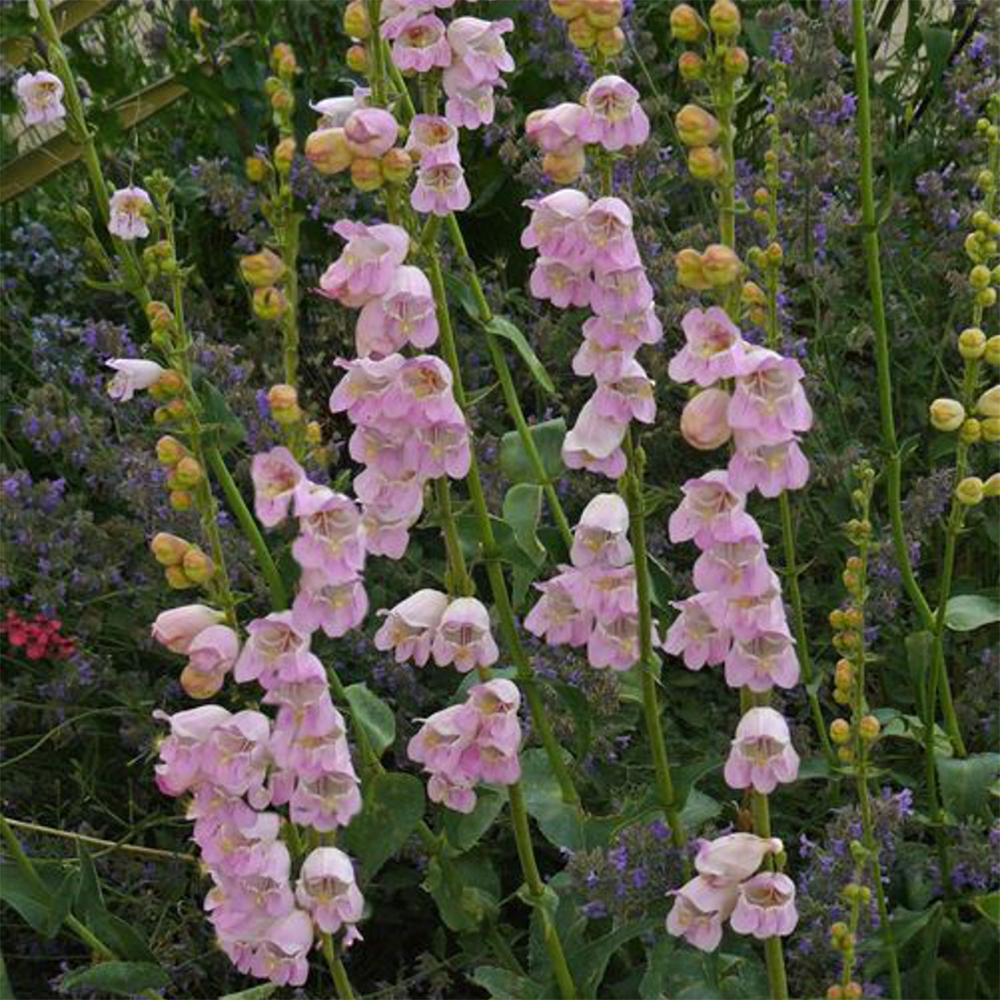 Image 2 of 3
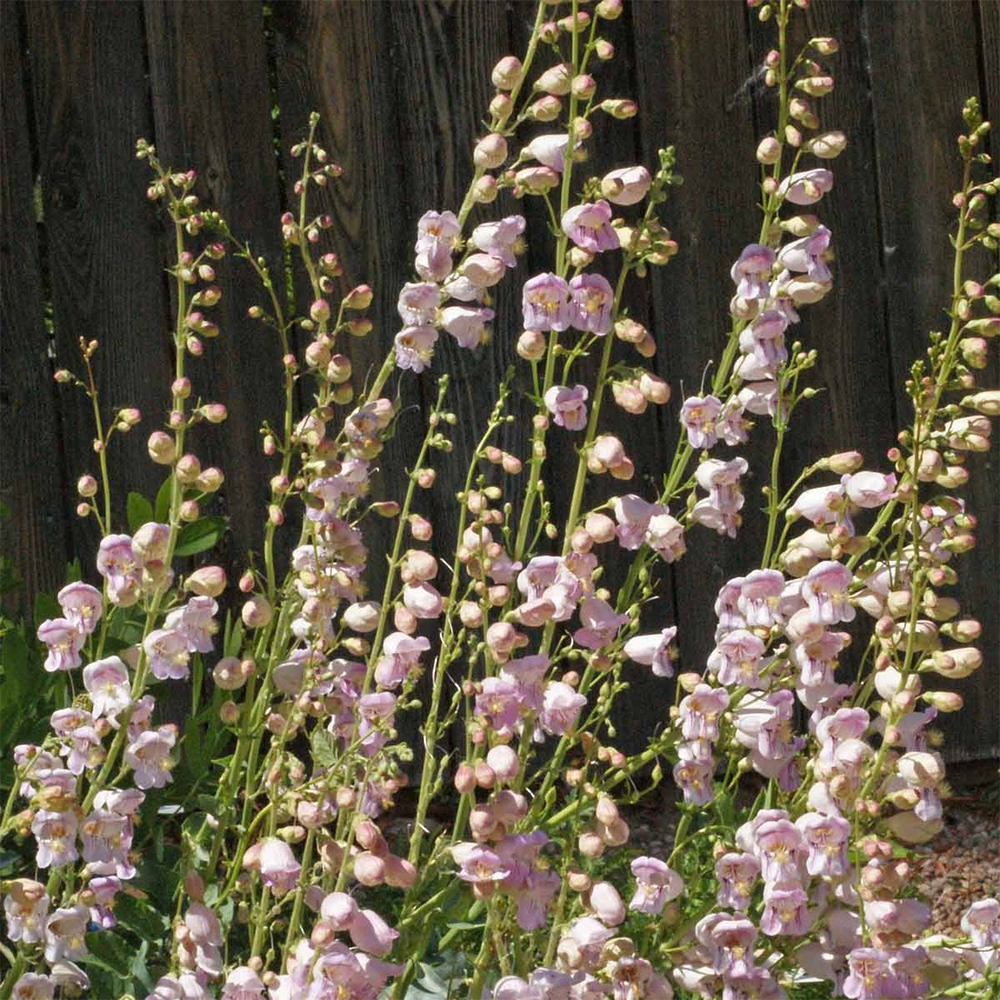 Image 3 of 3
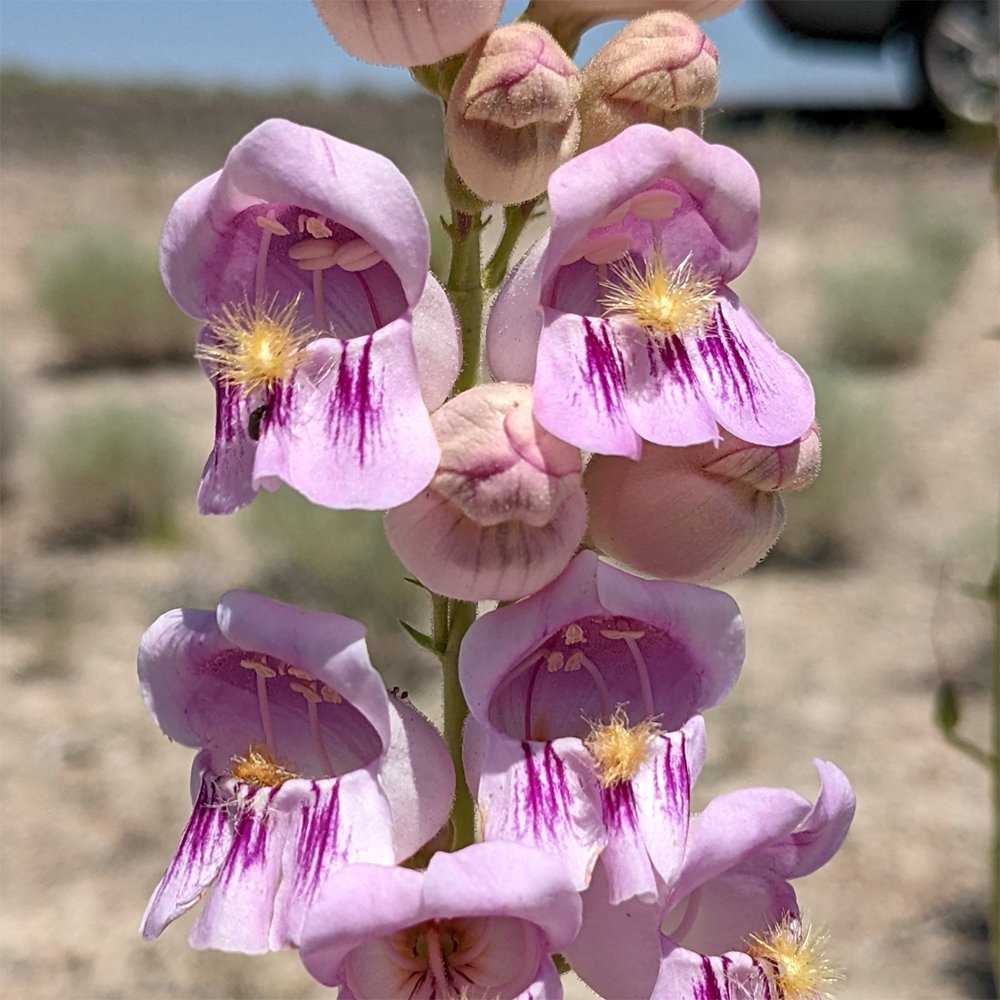
Penstemon palmeri, commonly known as Palmer’s Penstemon, Palmer’s Beardtongue, or Wild Snapdragon, is a striking perennial native to the southwestern United States. Its tall flower stalks rise above blue-gray foliage, bearing fragrant, pale pink blooms with purple markings from late spring into early summer. The large, pouch-shaped flowers attract bumblebees and other native bees. Mature plants typically reach 3–5 feet tall in bloom and approximately 2 feet wide, adding height and soft color to desert gardens and wildflower plantings.
Grow in full sun and sandy or gravelly soil with excellent drainage. Highly drought tolerant once established, this Southwest native thrives in dry heat and needs only occasional supplemental watering. Avoid soggy soil, heavy clay, and excessive fertilizer. Suitable for USDA Zones 4–9, established plants tolerate winter frost; Zone 4 corresponds to average annual extreme lows of approximately −30 to −20°F, although survival depends on drainage and local conditions.
Sow seeds in fall for natural winter exposure, pressing them onto prepared soil with only a very light covering. Keep the seedbed lightly moist during germination, then reduce watering as seedlings establish. Flowering often begins in the second year.
THIS LISTING IS FOR A PACK OF APPROX. 3200 SEEDS (1/10 OZ.)
Penstemon palmeri, commonly known as Palmer’s Penstemon, Palmer’s Beardtongue, or Wild Snapdragon, is a striking perennial native to the southwestern United States. Its tall flower stalks rise above blue-gray foliage, bearing fragrant, pale pink blooms with purple markings from late spring into early summer. The large, pouch-shaped flowers attract bumblebees and other native bees. Mature plants typically reach 3–5 feet tall in bloom and approximately 2 feet wide, adding height and soft color to desert gardens and wildflower plantings.
Grow in full sun and sandy or gravelly soil with excellent drainage. Highly drought tolerant once established, this Southwest native thrives in dry heat and needs only occasional supplemental watering. Avoid soggy soil, heavy clay, and excessive fertilizer. Suitable for USDA Zones 4–9, established plants tolerate winter frost; Zone 4 corresponds to average annual extreme lows of approximately −30 to −20°F, although survival depends on drainage and local conditions.
Sow seeds in fall for natural winter exposure, pressing them onto prepared soil with only a very light covering. Keep the seedbed lightly moist during germination, then reduce watering as seedlings establish. Flowering often begins in the second year.
THIS LISTING IS FOR A PACK OF APPROX. 3200 SEEDS (1/10 OZ.)