
 Image 1 of 4
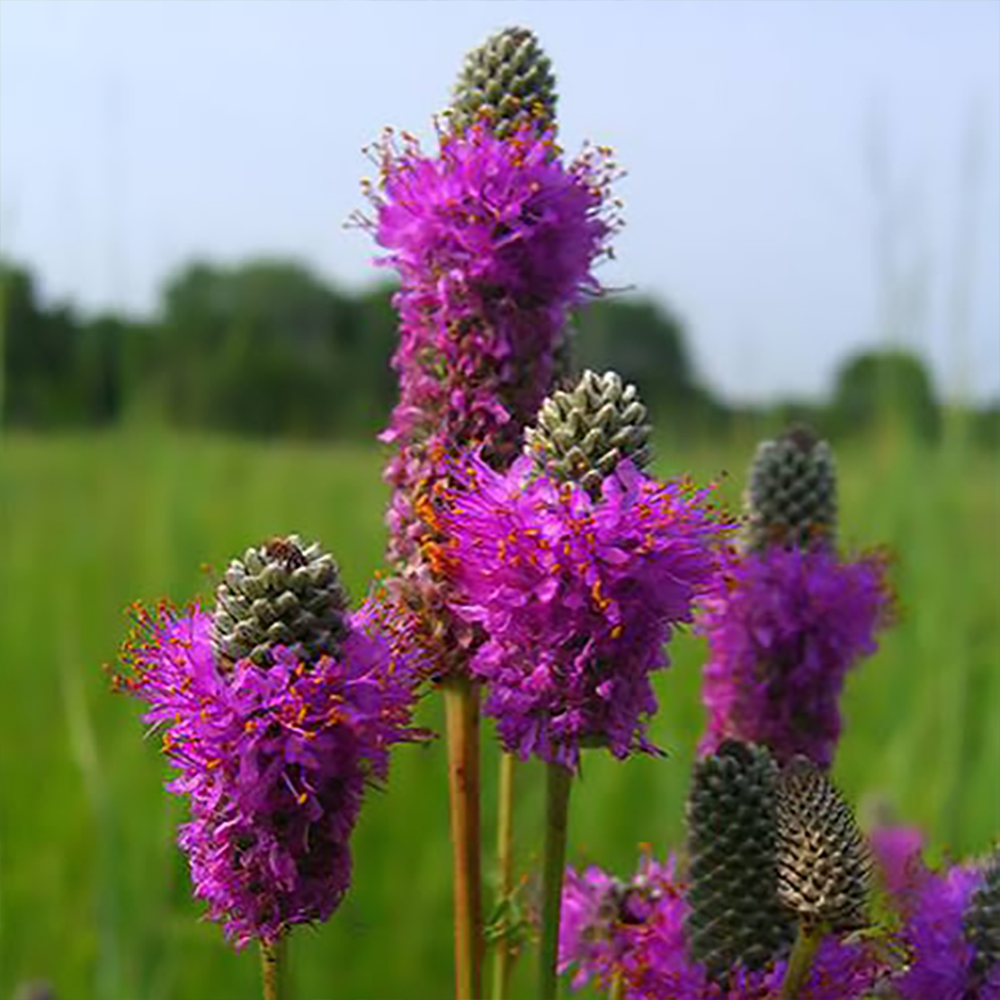 Image 2 of 4
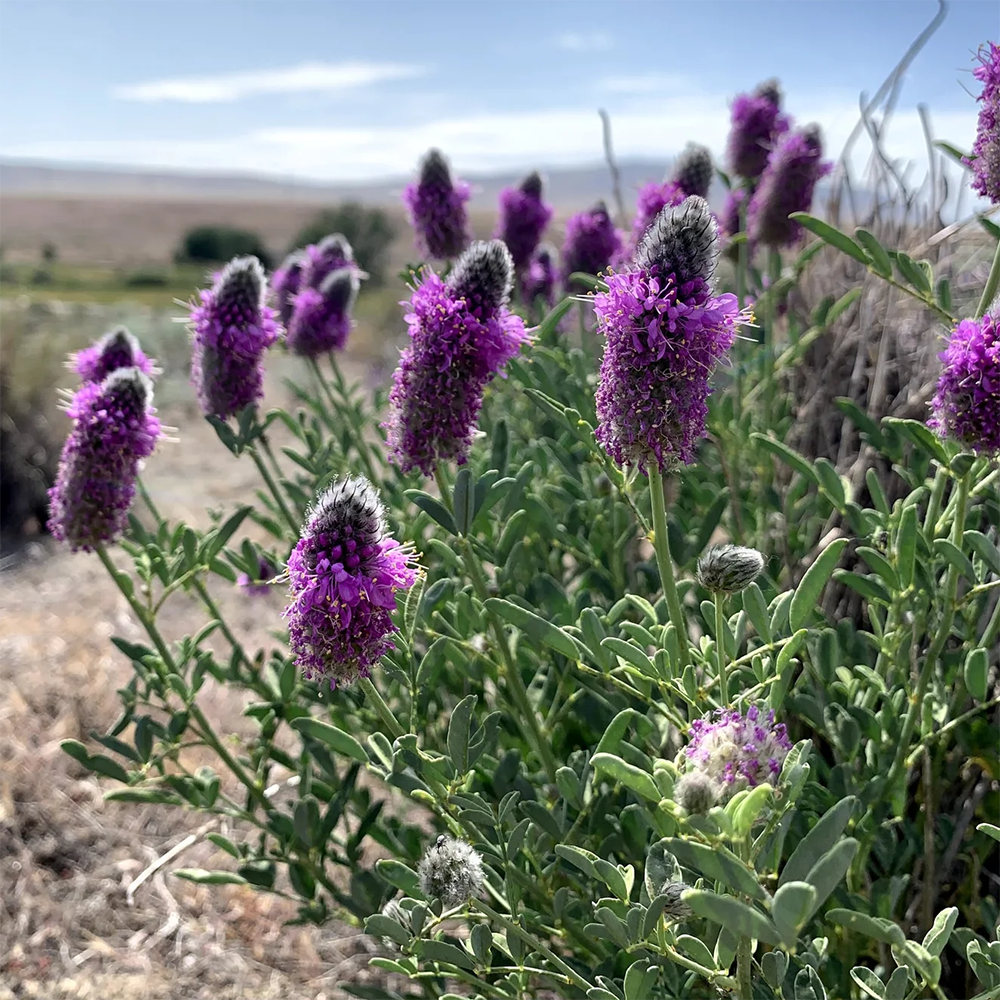 Image 3 of 4
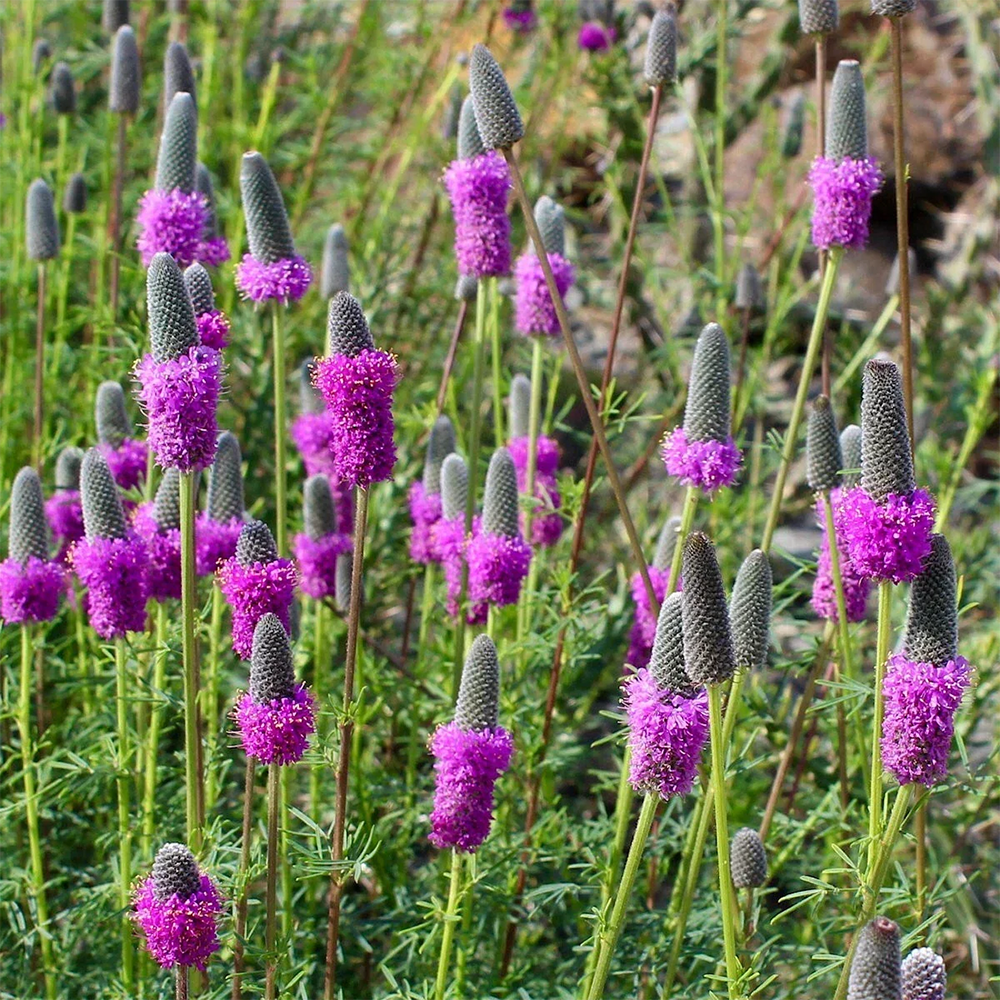 Image 4 of 4
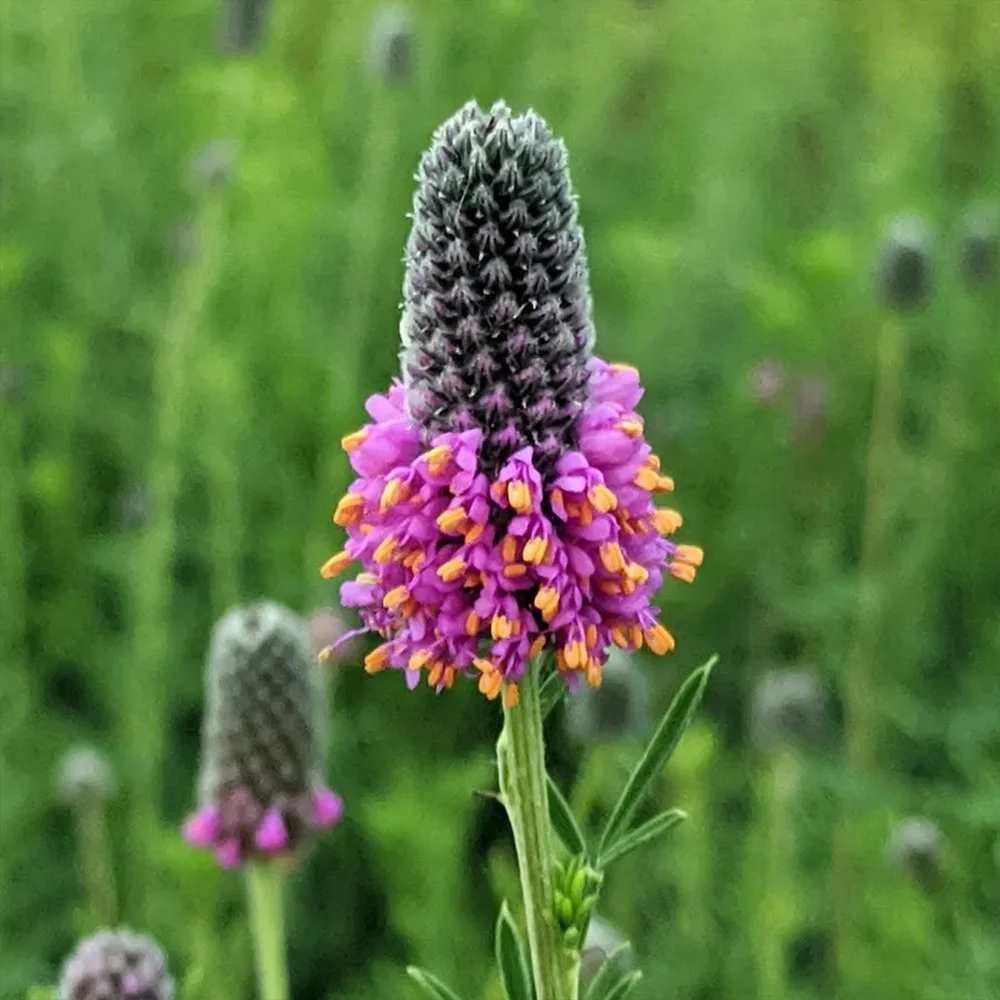
Dalea purpurea, commonly known as Purple Prairie Clover or Violet Prairie Clover, is a drought-tolerant perennial native to central North America, including portions of the Southwest. Its slender stems and finely divided green foliage are topped with purple, thimble-shaped flower spikes that bloom from the bottom upward during summer. These colorful flowers attract native bees and butterflies, while the foliage supports caterpillars of the Southern Dogface and Reakirt’s Blue butterflies. Mature plants reach approximately 1–3 feet tall and 12–18 inches wide.
Grow in full sun and well-drained soil. Its deep taproot provides drought tolerance once established, making it a lovely choice for prairie gardens, sunny borders, and water-wise wildflower plantings. Water regularly while young, then reduce watering as roots develop. Suitable for USDA Zones 3–8, it tolerates winter frost and warm summers; a precise upper temperature limit is not well established.
Sow seeds in late fall or spring, covering lightly with approximately ⅛ inch of soil. Cold stratification is generally unnecessary, but scarification may improve germination of untreated, hard-coated seeds; follow the instructions supplied with your seed lot. Keep the seedbed lightly moist during germination. Plants concentrate on root growth during their first year, with stronger growth and flowering in later seasons.
THIS LISTING IS FOR A PACK OF APPROX. 1750 SEEDS (1/10 OZ.)
Dalea purpurea, commonly known as Purple Prairie Clover or Violet Prairie Clover, is a drought-tolerant perennial native to central North America, including portions of the Southwest. Its slender stems and finely divided green foliage are topped with purple, thimble-shaped flower spikes that bloom from the bottom upward during summer. These colorful flowers attract native bees and butterflies, while the foliage supports caterpillars of the Southern Dogface and Reakirt’s Blue butterflies. Mature plants reach approximately 1–3 feet tall and 12–18 inches wide.
Grow in full sun and well-drained soil. Its deep taproot provides drought tolerance once established, making it a lovely choice for prairie gardens, sunny borders, and water-wise wildflower plantings. Water regularly while young, then reduce watering as roots develop. Suitable for USDA Zones 3–8, it tolerates winter frost and warm summers; a precise upper temperature limit is not well established.
Sow seeds in late fall or spring, covering lightly with approximately ⅛ inch of soil. Cold stratification is generally unnecessary, but scarification may improve germination of untreated, hard-coated seeds; follow the instructions supplied with your seed lot. Keep the seedbed lightly moist during germination. Plants concentrate on root growth during their first year, with stronger growth and flowering in later seasons.
THIS LISTING IS FOR A PACK OF APPROX. 1750 SEEDS (1/10 OZ.)