
 Image 1 of 2
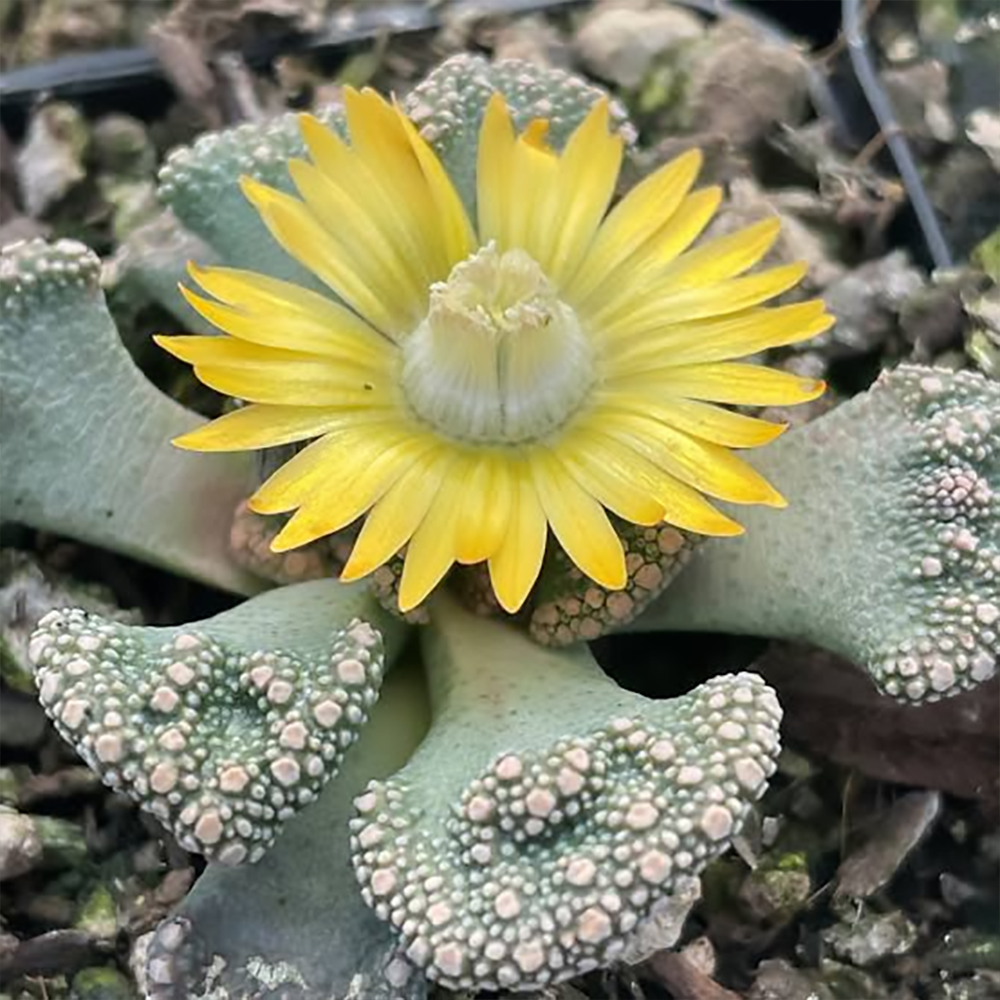 Image 2 of 2
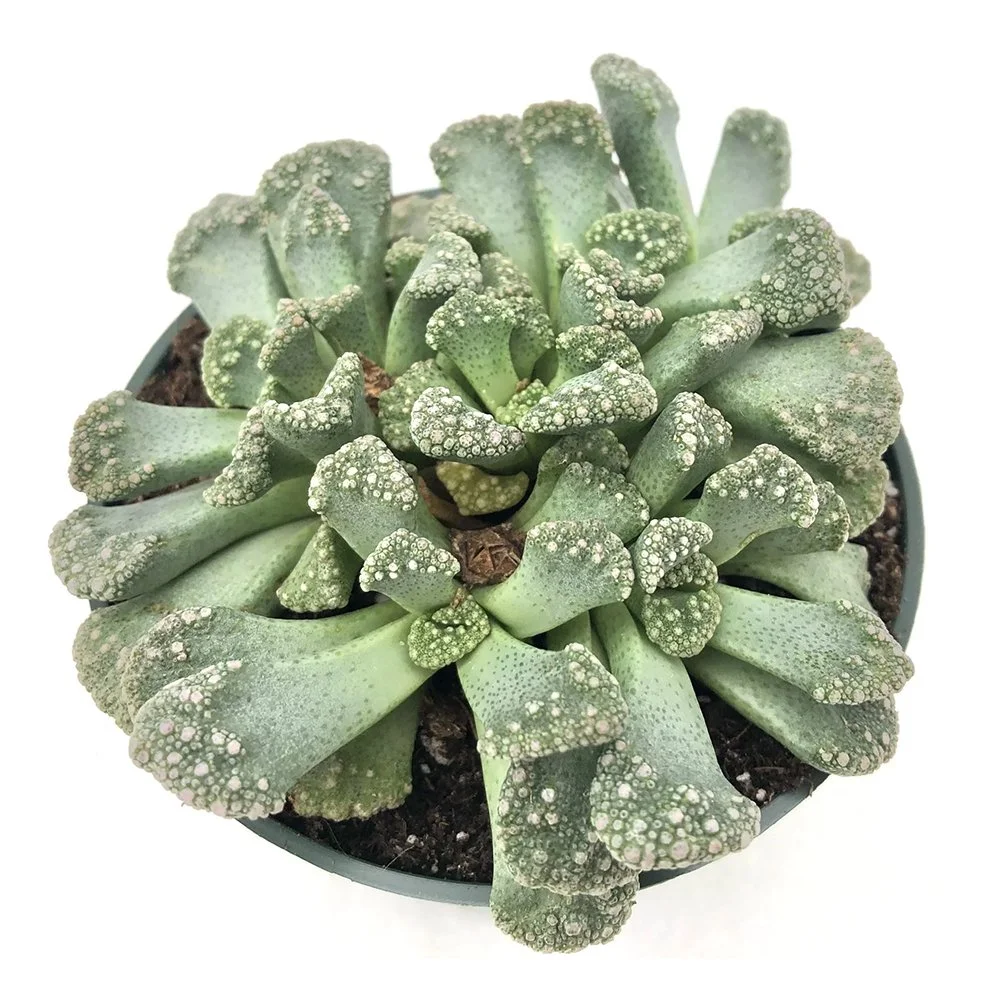
Titanopsis calcarea, commonly known as Concrete Leaf, Limestone Rock Plant, or Jewel Plant, is a fascinating miniature succulent native to the dry, rocky regions of South Africa and Namibia. A master of camouflage, its thick, spoon-shaped leaves are covered with distinctive white, gray, tan, and reddish bumps that allow the plant to blend into the limestone and gravel of its natural habitat. It forms compact rosettes, typically reaching about 2–3 inches tall and 3–5 inches wide, making it an excellent choice for small pots, rock gardens, and specialty succulent collections. Bright yellow to golden-yellow, daisy-like flowers typically appear during the cooler months.
Titanopsis calcarea can be grown indoors or outdoors and prefers bright light to full sun. Indoors, place it near a sunny window or under a grow light. Outdoors, gradually acclimate the plant to intense sunlight, especially in very hot climates. Grow it in exceptionally fast-draining, gritty soil and water sparingly, allowing the soil to dry thoroughly between waterings. Avoid prolonged wet conditions, particularly during hot weather. Surprisingly cold tolerant when kept dry, Titanopsis calcarea is generally suited to USDA Zones 9b–11 and can tolerate brief temperatures around 25–30°F under dry conditions. In colder climates, it is best grown in a container that can be brought indoors or protected from hard freezes.
Specialty Status: High — A distinctive collector succulent prized for its remarkable stone-like camouflage, highly textured leaves, compact size, and unusual appearance. It is especially sought after by collectors of unusual and mimicry succulents.
Titanopsis calcarea, commonly known as Concrete Leaf, Limestone Rock Plant, or Jewel Plant, is a fascinating miniature succulent native to the dry, rocky regions of South Africa and Namibia. A master of camouflage, its thick, spoon-shaped leaves are covered with distinctive white, gray, tan, and reddish bumps that allow the plant to blend into the limestone and gravel of its natural habitat. It forms compact rosettes, typically reaching about 2–3 inches tall and 3–5 inches wide, making it an excellent choice for small pots, rock gardens, and specialty succulent collections. Bright yellow to golden-yellow, daisy-like flowers typically appear during the cooler months.
Titanopsis calcarea can be grown indoors or outdoors and prefers bright light to full sun. Indoors, place it near a sunny window or under a grow light. Outdoors, gradually acclimate the plant to intense sunlight, especially in very hot climates. Grow it in exceptionally fast-draining, gritty soil and water sparingly, allowing the soil to dry thoroughly between waterings. Avoid prolonged wet conditions, particularly during hot weather. Surprisingly cold tolerant when kept dry, Titanopsis calcarea is generally suited to USDA Zones 9b–11 and can tolerate brief temperatures around 25–30°F under dry conditions. In colder climates, it is best grown in a container that can be brought indoors or protected from hard freezes.
Specialty Status: High — A distinctive collector succulent prized for its remarkable stone-like camouflage, highly textured leaves, compact size, and unusual appearance. It is especially sought after by collectors of unusual and mimicry succulents.