
 Image 1 of 3
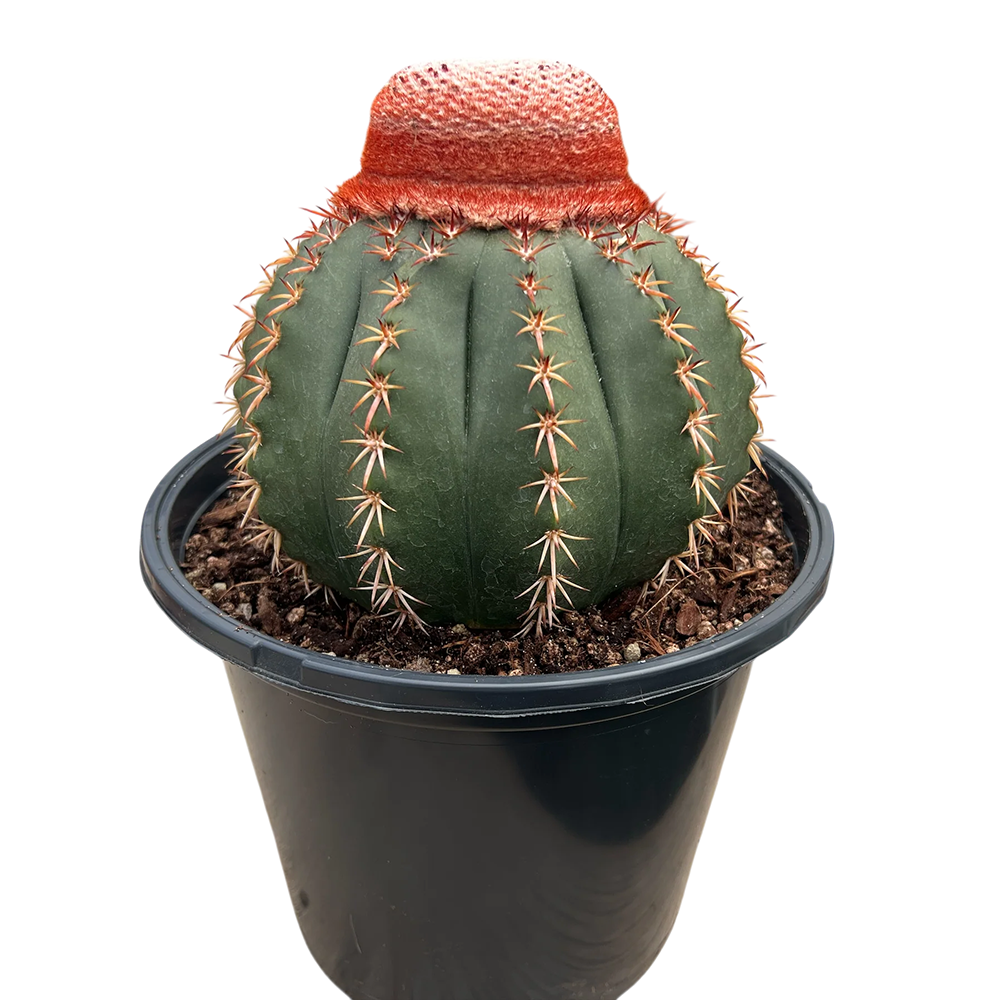 Image 2 of 3
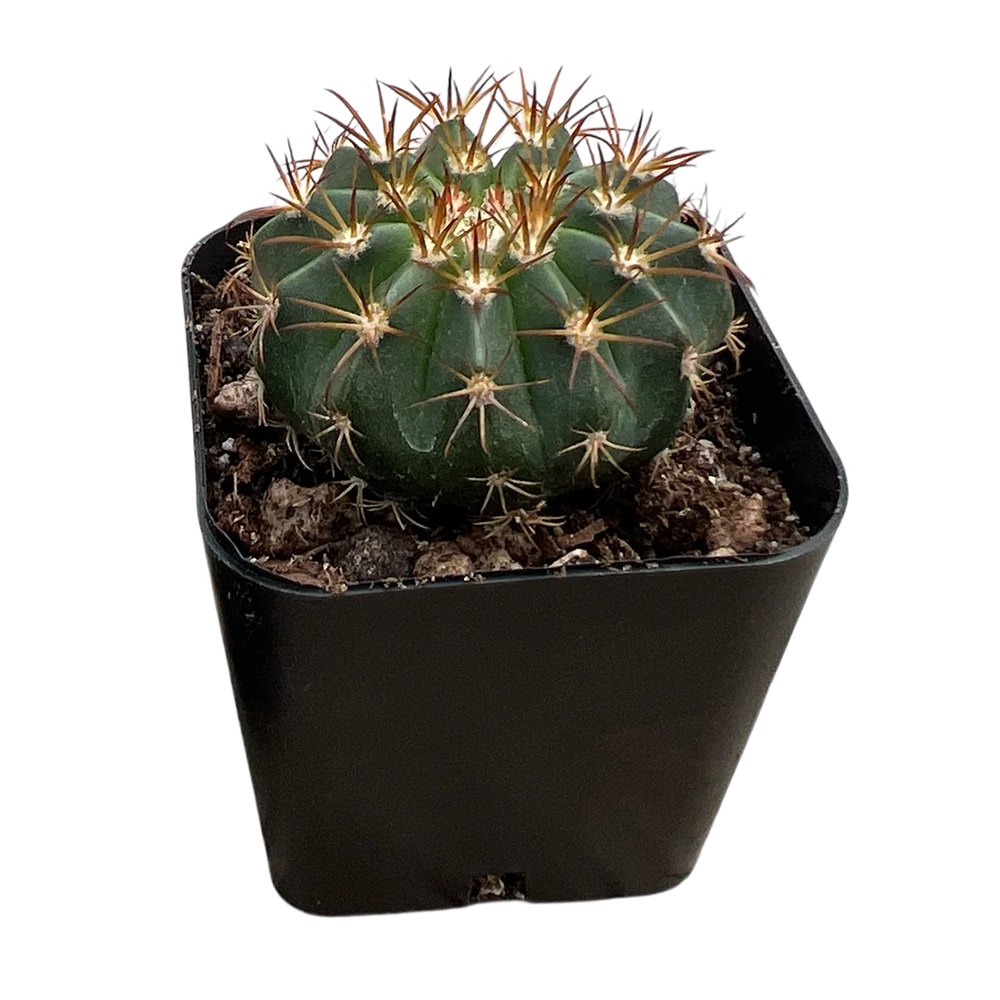 Image 3 of 3
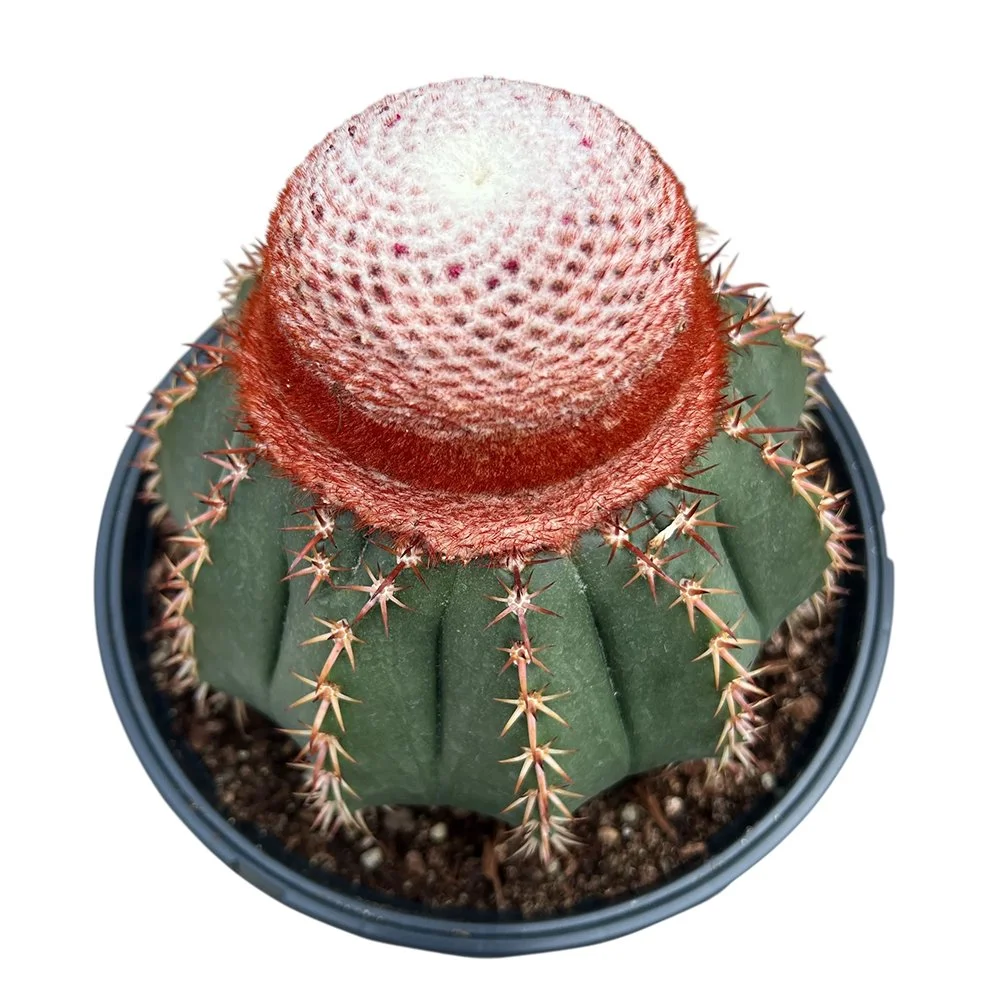
Melocactus conoideus, commonly known as the Cone-Like Turk’s Head Cactus, is an exceptionally distinctive and highly collectible cactus native to Bahia, Brazil. It develops a squat, rounded body with pronounced ribs and stout gray-brown spines, typically reaching about 4–7 inches across. At maturity, it produces its most remarkable feature—a dense, bristly cephalium at the crown, from which small pink to magenta flowers and colorful fruits emerge.
Native to rocky, quartz-gravel habitats, this cactus prefers bright light to full sun, very fast-draining mineral-rich soil, and warm conditions. Water carefully during active growth and allow the soil to dry between waterings. Keep considerably drier in winter and protect from prolonged cold and frost. Best suited to approximately USDA Zones 10b–11 outdoors; in colder zones, grow it as a container plant that can be protected during cool weather. Aim to keep it above about 40°F, especially mature plants with a cephalium.
Conservation Status: Critically Endangered (CR) — Melocactus conoideus has an extremely restricted natural range and is threatened by habitat loss and disturbance. It is also listed under CITES Appendix I. Nursery-propagated plants help reduce pressure on remaining wild populations.
Melocactus conoideus, commonly known as the Cone-Like Turk’s Head Cactus, is an exceptionally distinctive and highly collectible cactus native to Bahia, Brazil. It develops a squat, rounded body with pronounced ribs and stout gray-brown spines, typically reaching about 4–7 inches across. At maturity, it produces its most remarkable feature—a dense, bristly cephalium at the crown, from which small pink to magenta flowers and colorful fruits emerge.
Native to rocky, quartz-gravel habitats, this cactus prefers bright light to full sun, very fast-draining mineral-rich soil, and warm conditions. Water carefully during active growth and allow the soil to dry between waterings. Keep considerably drier in winter and protect from prolonged cold and frost. Best suited to approximately USDA Zones 10b–11 outdoors; in colder zones, grow it as a container plant that can be protected during cool weather. Aim to keep it above about 40°F, especially mature plants with a cephalium.
Conservation Status: Critically Endangered (CR) — Melocactus conoideus has an extremely restricted natural range and is threatened by habitat loss and disturbance. It is also listed under CITES Appendix I. Nursery-propagated plants help reduce pressure on remaining wild populations.