
 Image 1 of 3
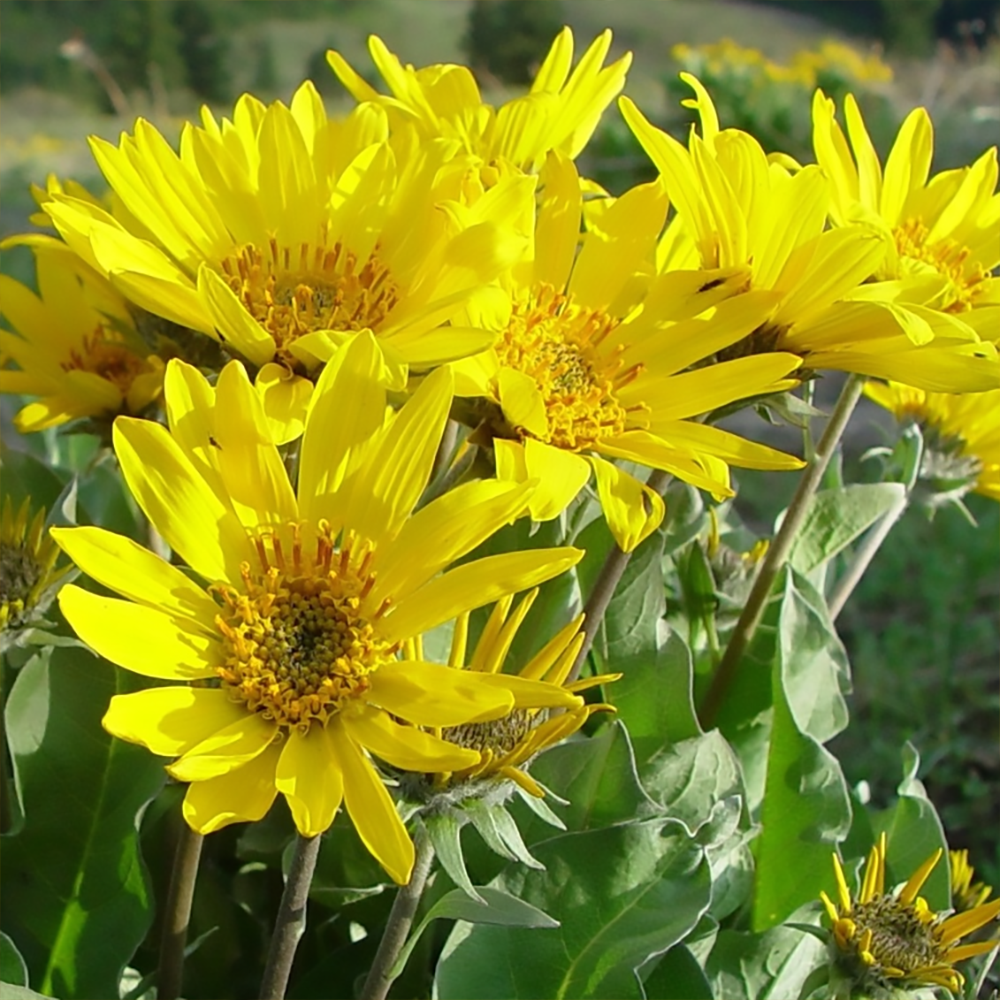 Image 2 of 3
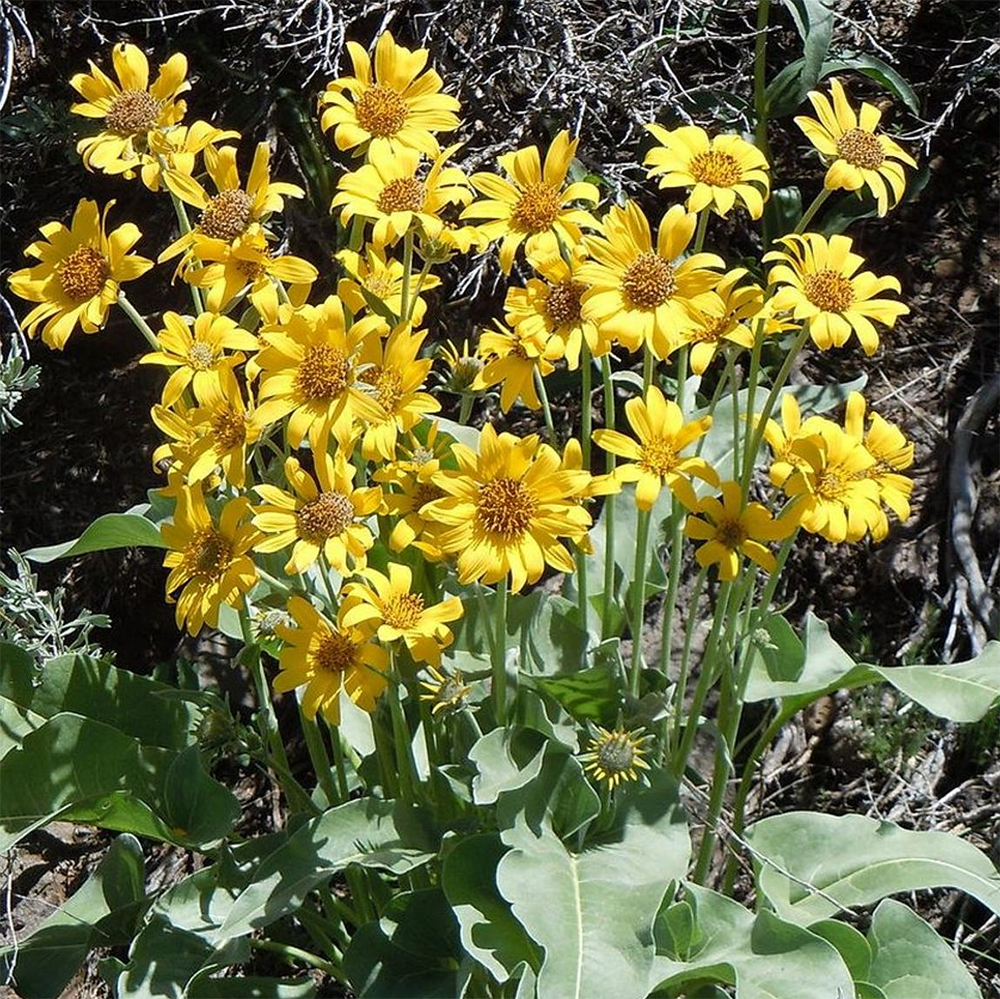 Image 3 of 3
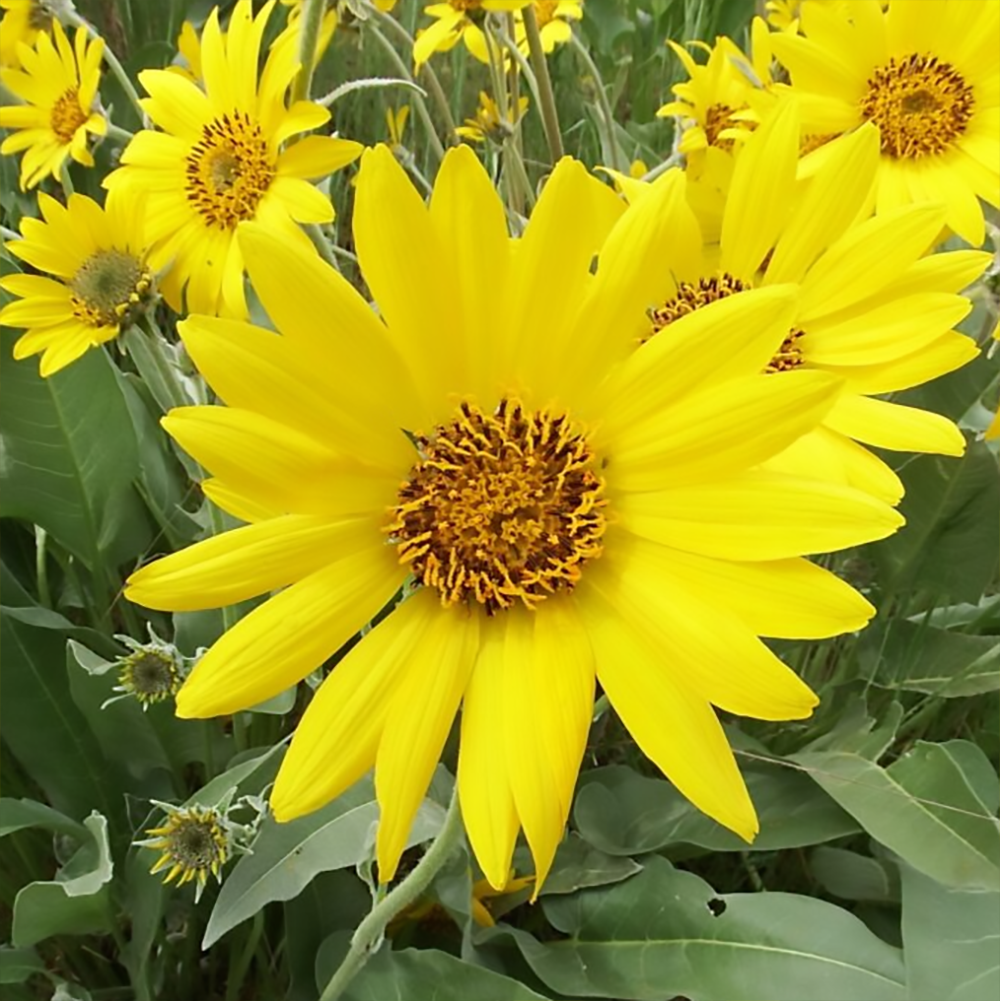
Balsamorhiza sagittata, commonly known as Arrowleaf Balsamroot or Oregon Sunflower, is a long-lived perennial wildflower native to western North America, from western Canada through much of the western United States. Its large, arrow-shaped, silvery-green leaves form an attractive basal clump, topped by bright golden-yellow, sunflower-like flowers in spring to early summer. Mature plants typically reach approximately 1–2 feet tall and wide. The cheerful blooms attract native bees, while the seeds provide food for birds.
Arrowleaf Balsamroot thrives in full sun to light shade and deep, well-draining soil. Its substantial taproot provides excellent drought tolerance once established. Best suited to cooler high-desert, foothill, and mountain gardens, it generally grows in approximately USDA Zones 4–8. Dormant, established plants tolerate cold winters, including temperatures around −20°F, depending on seed origin and growing conditions. Plants often become dormant during hot, dry summer weather; avoid frequent watering during dormancy. It is better suited to the Southwest’s cooler elevations than to intensely hot low-desert gardens.
Sow seeds outdoors in late fall where winter conditions provide prolonged cold, moist exposure, or provide approximately 8–12 weeks of cold, moist stratification before sowing. Germination and early growth can be slow, and plants may take several years to flower as they develop their deep roots. Sow in a permanent location whenever possible, as established plants are difficult to transplant.
THIS LISTING IS FOR A PACK OF APPROX. 340 SEEDS (1/10 OZ.)
Balsamorhiza sagittata, commonly known as Arrowleaf Balsamroot or Oregon Sunflower, is a long-lived perennial wildflower native to western North America, from western Canada through much of the western United States. Its large, arrow-shaped, silvery-green leaves form an attractive basal clump, topped by bright golden-yellow, sunflower-like flowers in spring to early summer. Mature plants typically reach approximately 1–2 feet tall and wide. The cheerful blooms attract native bees, while the seeds provide food for birds.
Arrowleaf Balsamroot thrives in full sun to light shade and deep, well-draining soil. Its substantial taproot provides excellent drought tolerance once established. Best suited to cooler high-desert, foothill, and mountain gardens, it generally grows in approximately USDA Zones 4–8. Dormant, established plants tolerate cold winters, including temperatures around −20°F, depending on seed origin and growing conditions. Plants often become dormant during hot, dry summer weather; avoid frequent watering during dormancy. It is better suited to the Southwest’s cooler elevations than to intensely hot low-desert gardens.
Sow seeds outdoors in late fall where winter conditions provide prolonged cold, moist exposure, or provide approximately 8–12 weeks of cold, moist stratification before sowing. Germination and early growth can be slow, and plants may take several years to flower as they develop their deep roots. Sow in a permanent location whenever possible, as established plants are difficult to transplant.
THIS LISTING IS FOR A PACK OF APPROX. 340 SEEDS (1/10 OZ.)