
 Image 1 of 3
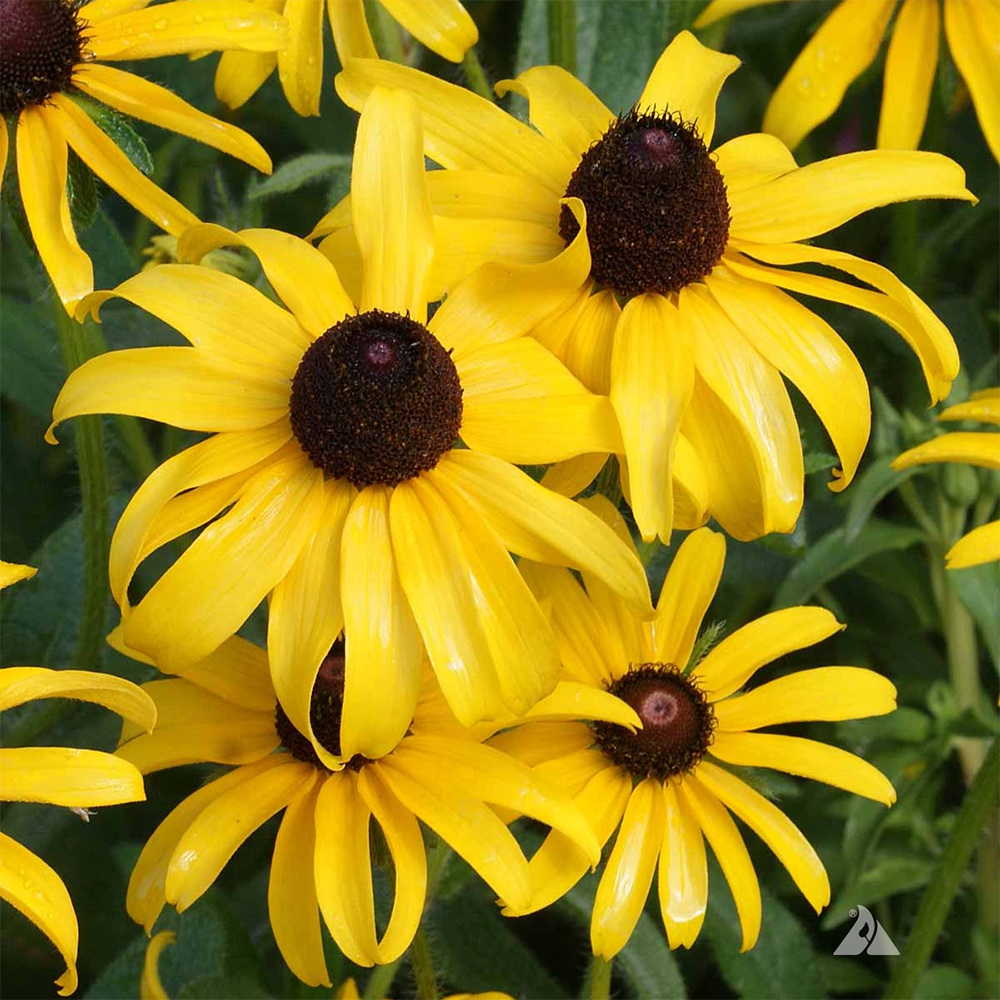 Image 2 of 3
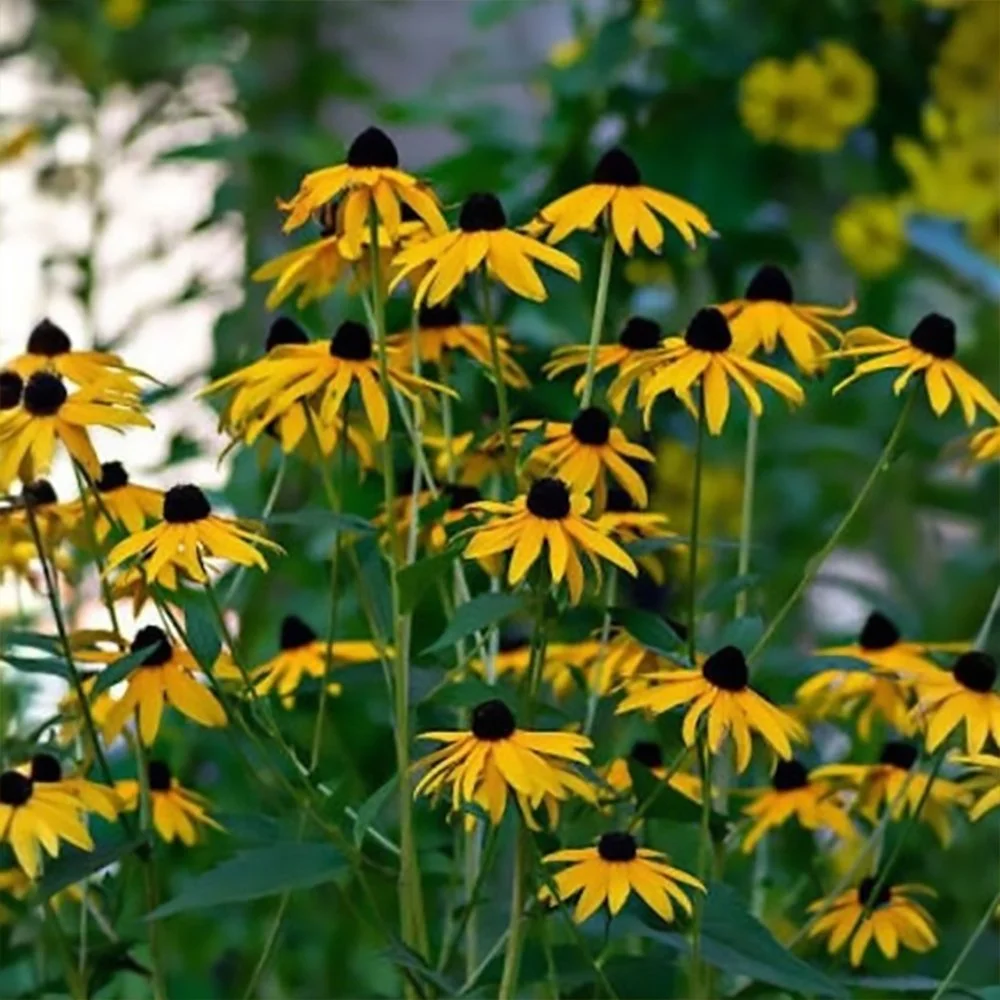 Image 3 of 3
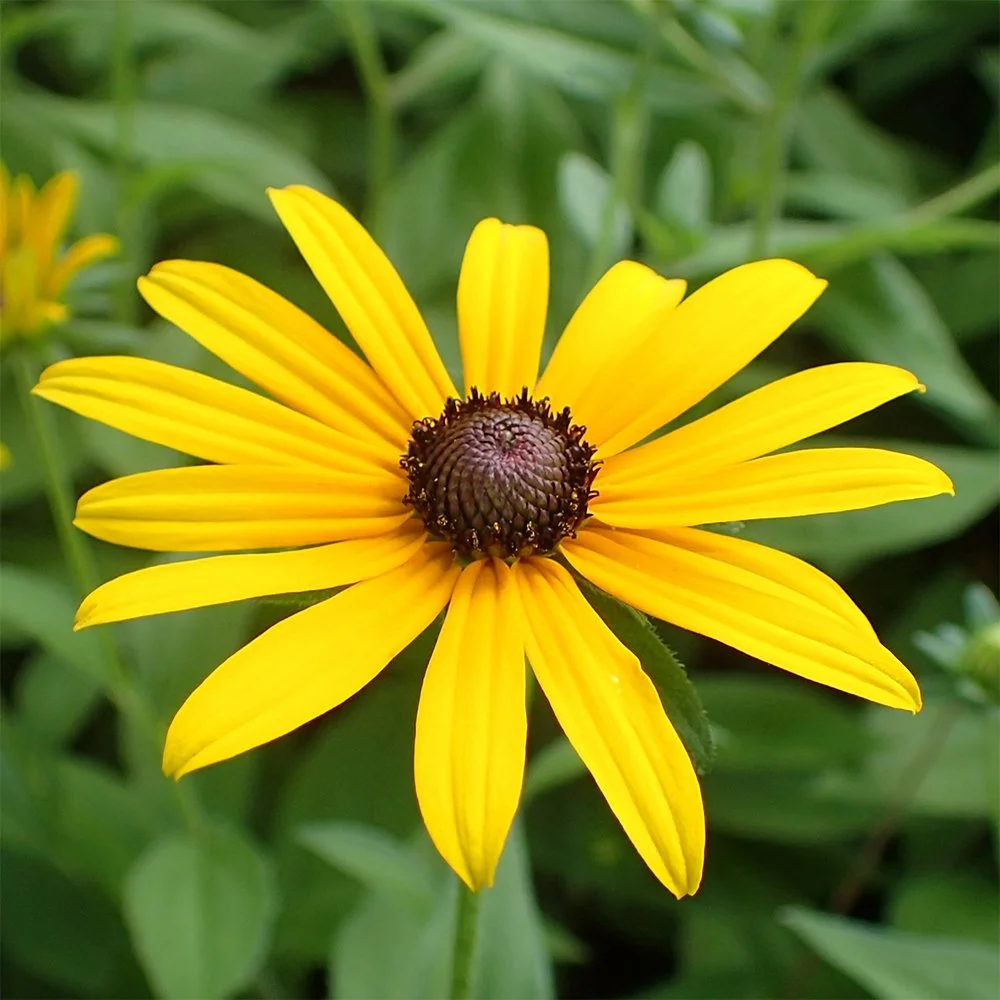
Rudbeckia hirta, commonly known as Black-Eyed Susan, is a cheerful North American wildflower prized for its golden-yellow, daisy-like flowers surrounding dark chocolate-brown centers. Native to central and eastern North America, it grows as an annual, biennial, or short-lived perennial, depending on climate and growing conditions. Mature plants typically reach approximately 2–4 feet tall and 1–2 feet wide, producing colorful blooms from summer into fall. The flowers attract bees and butterflies, while seedheads left standing provide food for goldfinches and other seed-eating birds.
Black-Eyed Susan thrives in full sun and well-draining soil, tolerating light shade and occasional drought once established. Water regularly during establishment, then supplement during prolonged dry spells for better flowering. Generally suited to USDA Zones 3–8, overwintering plants are cold hardy, with Zone 3 corresponding to average annual extreme minimum temperatures of approximately −40 to −30°F. It tolerates warm summers, but in hot Southwest gardens, provide afternoon shade and additional moisture during extreme heat.
Sow seeds in fall or spring on prepared soil, pressing them gently into the surface and covering only very lightly. Keep the seedbed consistently moist during germination. For indoor starting, daytime temperatures around 65–70°F are suitable, with seedlings often emerging in approximately two weeks. Many seed lots germinate without cold treatment; follow your packet’s instructions. Remove spent flowers to encourage continued blooming, or leave some seedheads to support birds and allow natural reseeding
THIS LISTING IS FOR A PACK OF APPROX. 10,000 SEEDS (1/10 OZ.)
Rudbeckia hirta, commonly known as Black-Eyed Susan, is a cheerful North American wildflower prized for its golden-yellow, daisy-like flowers surrounding dark chocolate-brown centers. Native to central and eastern North America, it grows as an annual, biennial, or short-lived perennial, depending on climate and growing conditions. Mature plants typically reach approximately 2–4 feet tall and 1–2 feet wide, producing colorful blooms from summer into fall. The flowers attract bees and butterflies, while seedheads left standing provide food for goldfinches and other seed-eating birds.
Black-Eyed Susan thrives in full sun and well-draining soil, tolerating light shade and occasional drought once established. Water regularly during establishment, then supplement during prolonged dry spells for better flowering. Generally suited to USDA Zones 3–8, overwintering plants are cold hardy, with Zone 3 corresponding to average annual extreme minimum temperatures of approximately −40 to −30°F. It tolerates warm summers, but in hot Southwest gardens, provide afternoon shade and additional moisture during extreme heat.
Sow seeds in fall or spring on prepared soil, pressing them gently into the surface and covering only very lightly. Keep the seedbed consistently moist during germination. For indoor starting, daytime temperatures around 65–70°F are suitable, with seedlings often emerging in approximately two weeks. Many seed lots germinate without cold treatment; follow your packet’s instructions. Remove spent flowers to encourage continued blooming, or leave some seedheads to support birds and allow natural reseeding
THIS LISTING IS FOR A PACK OF APPROX. 10,000 SEEDS (1/10 OZ.)