
 Image 1 of 4
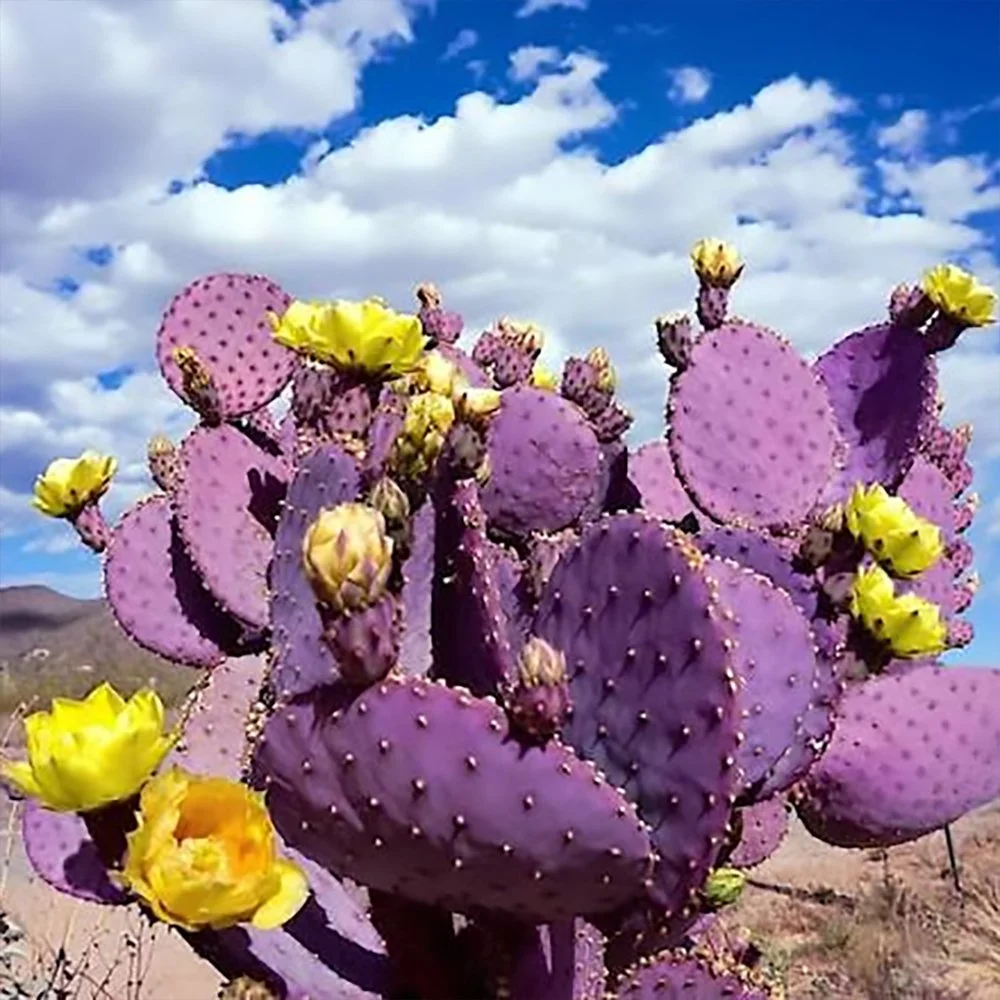 Image 2 of 4
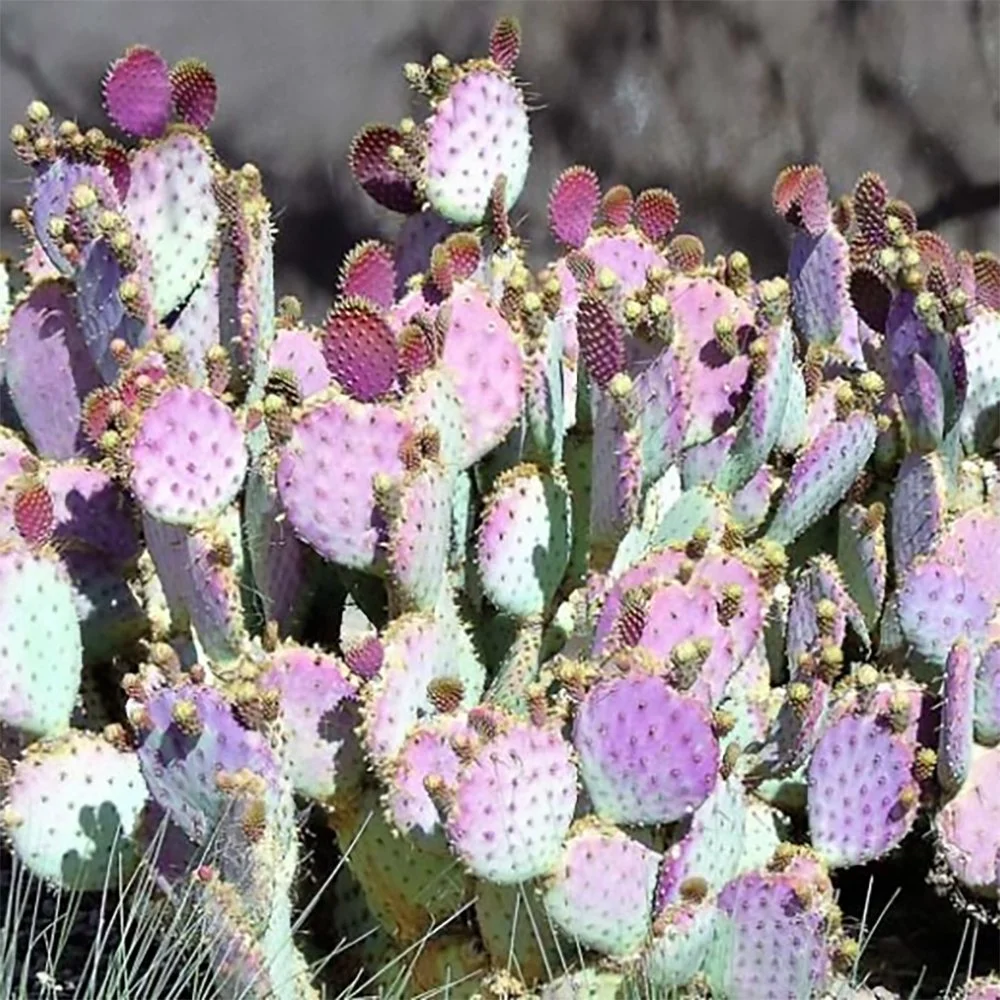 Image 3 of 4
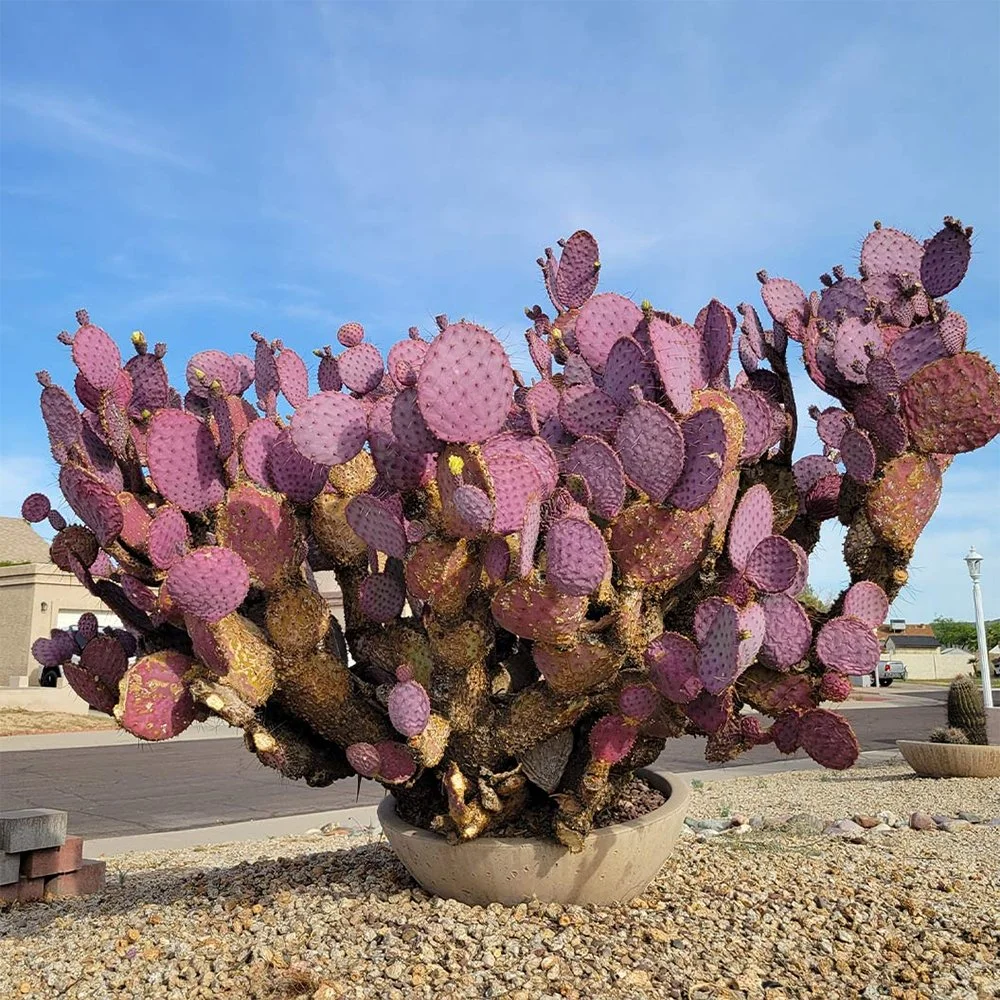 Image 4 of 4
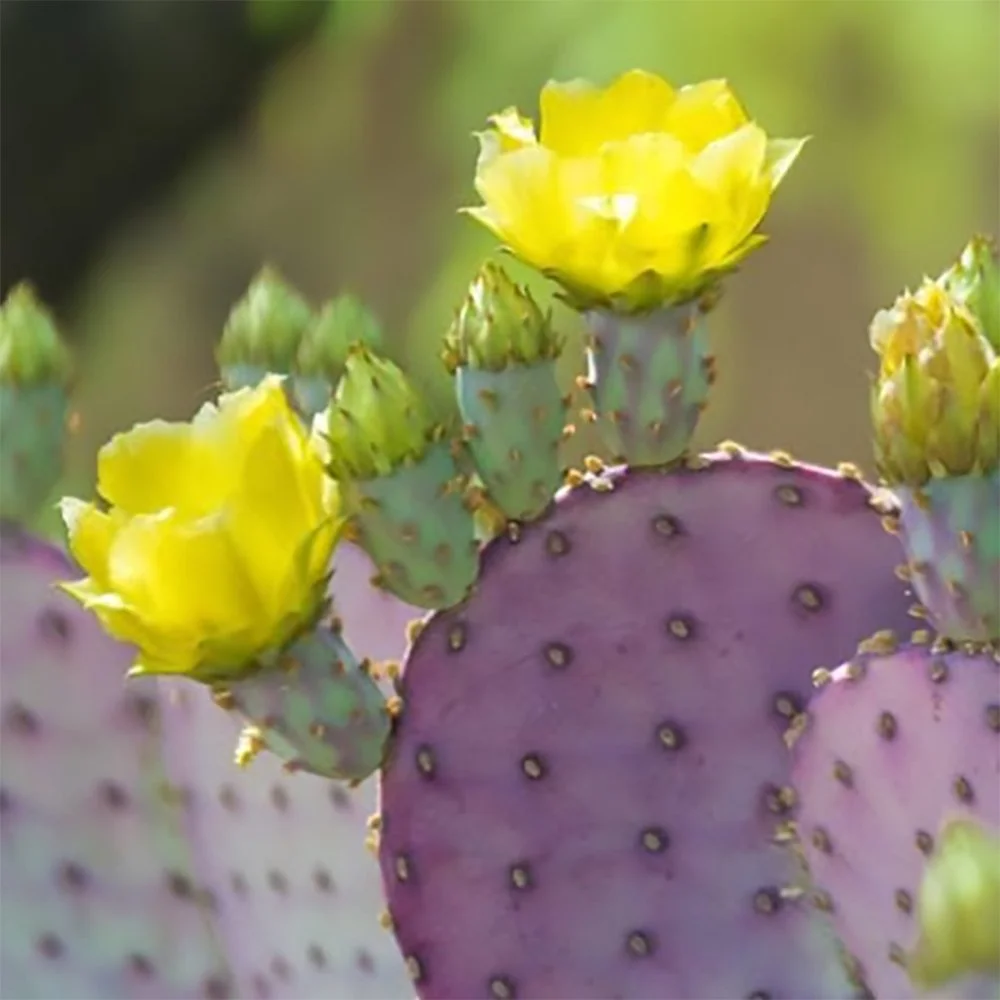
Opuntia santa-rita, commonly known as Santa Rita Prickly Pear, Purple Prickly Pear, or Nopal Morado, is a striking cactus prized for its rounded pads and seasonal color changes. Native to the grasslands and transition areas of southern Arizona and adjacent Sonora, Mexico, it forms an upright, branching clump approximately 4–6 feet tall and wide. Its blue-gray pads develop rich purple and violet tones during cooler weather, with coloring varying between individual plants. Bright yellow flowers appear in spring, typically April or May, adding cheerful contrast to the colorful pads.
Santa Rita Prickly Pear is best grown outdoors in full sun, where it develops strong growth and its richest purple coloring. It makes a beautiful accent for rock gardens, water-wise landscapes, and large patio containers. Plant in well-draining soil, water during establishment, and reduce watering once established, allowing the soil to dry between waterings. Avoid excess winter moisture.
Generally suited to USDA Zones 8–11, this heat-loving cactus thrives in hot desert conditions and is hardy to approximately 15°F when established. Protect young plants and exposed containers during severe freezes. Pads bear tiny, irritating glochids even when long spines are sparse or absent; use gloves or tongs when handling.
THIS LISTING IS FOR AN UNROOTED PAD, 5-8 INCHES ACROSS.
Opuntia santa-rita, commonly known as Santa Rita Prickly Pear, Purple Prickly Pear, or Nopal Morado, is a striking cactus prized for its rounded pads and seasonal color changes. Native to the grasslands and transition areas of southern Arizona and adjacent Sonora, Mexico, it forms an upright, branching clump approximately 4–6 feet tall and wide. Its blue-gray pads develop rich purple and violet tones during cooler weather, with coloring varying between individual plants. Bright yellow flowers appear in spring, typically April or May, adding cheerful contrast to the colorful pads.
Santa Rita Prickly Pear is best grown outdoors in full sun, where it develops strong growth and its richest purple coloring. It makes a beautiful accent for rock gardens, water-wise landscapes, and large patio containers. Plant in well-draining soil, water during establishment, and reduce watering once established, allowing the soil to dry between waterings. Avoid excess winter moisture.
Generally suited to USDA Zones 8–11, this heat-loving cactus thrives in hot desert conditions and is hardy to approximately 15°F when established. Protect young plants and exposed containers during severe freezes. Pads bear tiny, irritating glochids even when long spines are sparse or absent; use gloves or tongs when handling.
THIS LISTING IS FOR AN UNROOTED PAD, 5-8 INCHES ACROSS.