
 Image 1 of 2
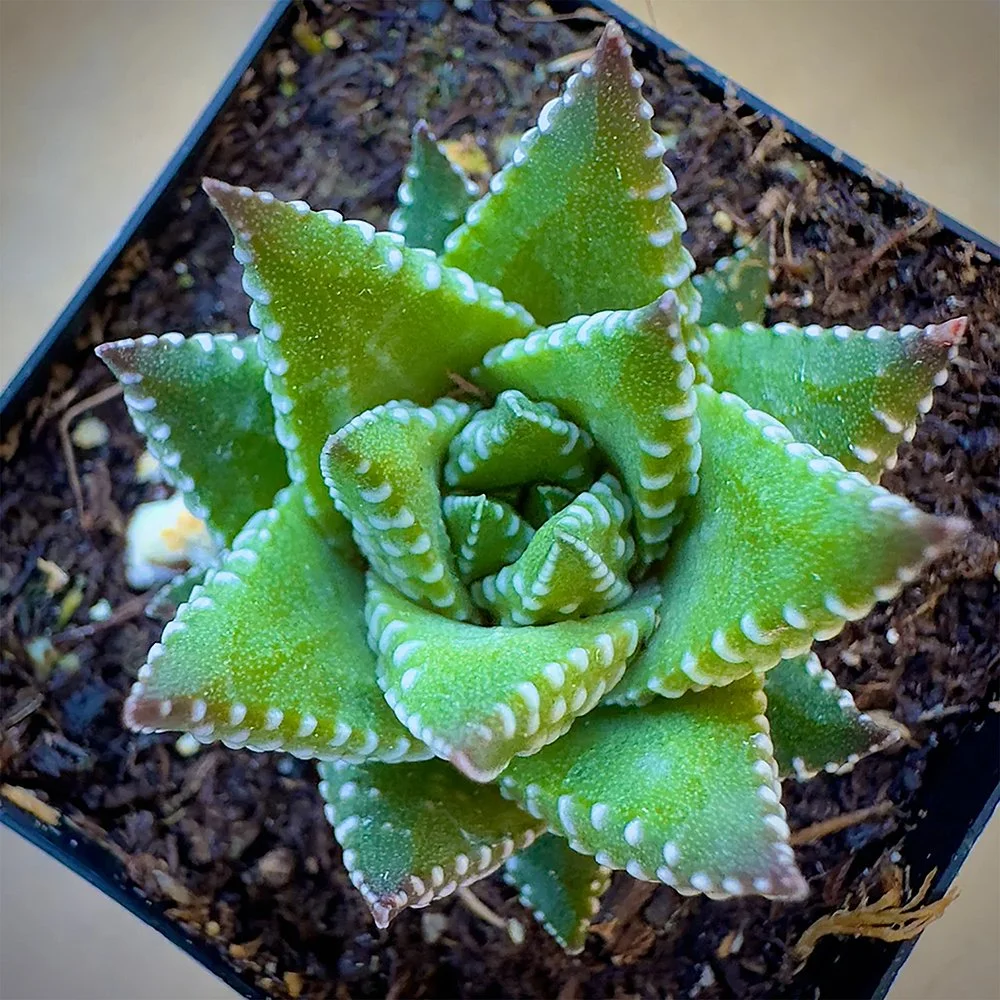 Image 2 of 2
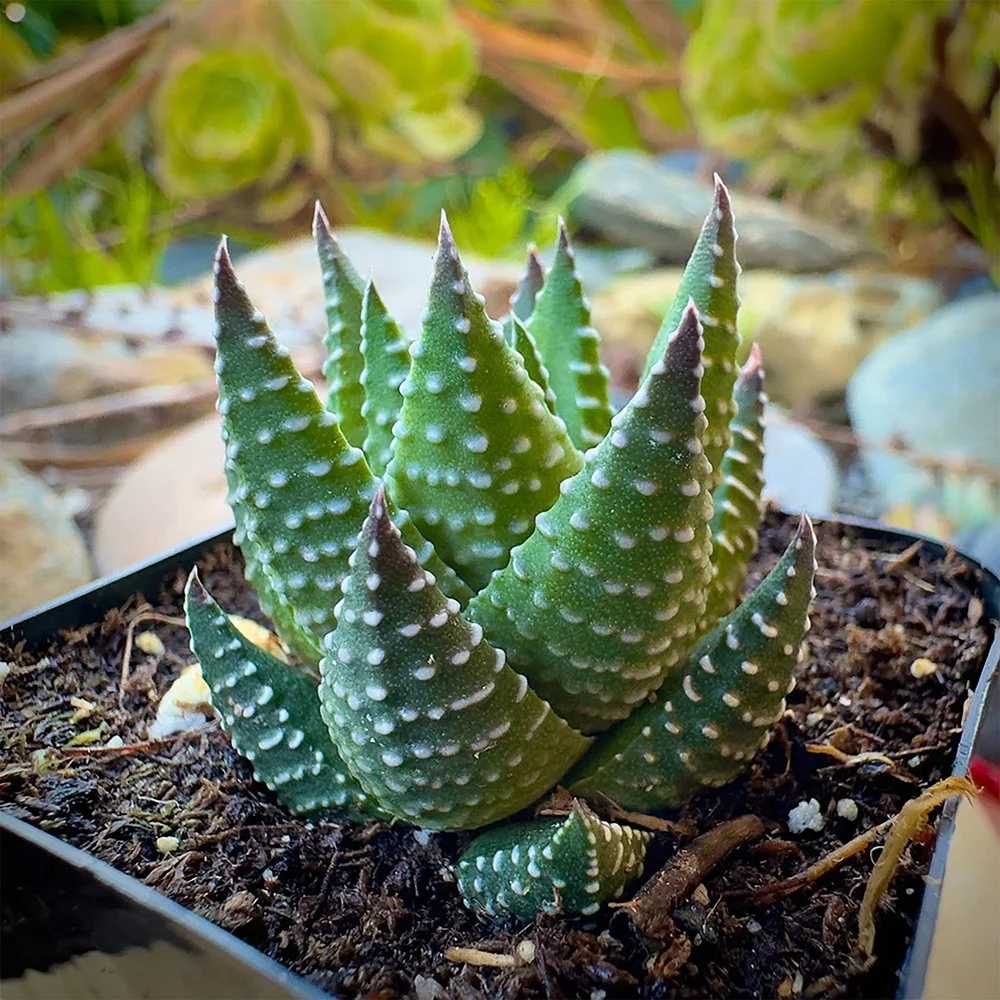
Tulista kingiana (formerly Haworthia kingiana) is commonly called King Tulista, King Haworthia, Pearl Plant, and Miniature Aloe. It is a rare, slow-growing South African succulent prized for its compact rosette of yellow-green, heavily tubercled leaves and distinctive collector appeal. A highly collectible species, Tulista kingiana is an endangered South African endemic found naturally in only a small area of the Western Cape. Its restricted distribution, slow growth, and limited wild populations make it a particularly desirable specialty succulent for collectors. Mature plants typically reach approximately 6–12 inches tall and 6–10 inches wide, making them excellent for containers, rock gardens, and specialty succulent collections. It performs best in 60–85°F temperatures and is generally suited to USDA Zones 9–11, tolerating brief cold near 25–30°F when kept dry, but it benefits from protection from prolonged freezing and winter moisture. Provide bright filtered light to partial sun, excellent drainage, and allow the soil to dry between waterings. Its sculptural form and unusual texture make it a standout specimen for collectors, while its slow growth and relative rarity add to its value as a specialty nursery offering.
THIS LISTING IS FOR A BARE-ROOT SPECIMEN, 1-3 INCHES TALL. Plant in well-draining soil and watch it grow!
Tulista kingiana (formerly Haworthia kingiana) is commonly called King Tulista, King Haworthia, Pearl Plant, and Miniature Aloe. It is a rare, slow-growing South African succulent prized for its compact rosette of yellow-green, heavily tubercled leaves and distinctive collector appeal. A highly collectible species, Tulista kingiana is an endangered South African endemic found naturally in only a small area of the Western Cape. Its restricted distribution, slow growth, and limited wild populations make it a particularly desirable specialty succulent for collectors. Mature plants typically reach approximately 6–12 inches tall and 6–10 inches wide, making them excellent for containers, rock gardens, and specialty succulent collections. It performs best in 60–85°F temperatures and is generally suited to USDA Zones 9–11, tolerating brief cold near 25–30°F when kept dry, but it benefits from protection from prolonged freezing and winter moisture. Provide bright filtered light to partial sun, excellent drainage, and allow the soil to dry between waterings. Its sculptural form and unusual texture make it a standout specimen for collectors, while its slow growth and relative rarity add to its value as a specialty nursery offering.
THIS LISTING IS FOR A BARE-ROOT SPECIMEN, 1-3 INCHES TALL. Plant in well-draining soil and watch it grow!